


Yes Album: «The Yes Album»
Yes Album: «The Yes Album»
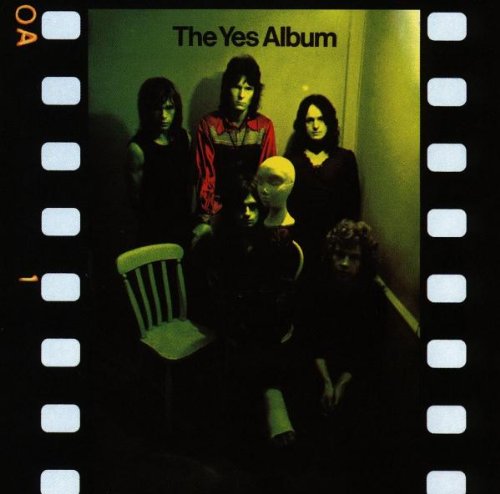
- Customers rating: (4.7 of 5)
- Title:The Yes Album
- Release date:1994-08-16
- Type:Audio CD
- Label:Atlantic UK
- UPC:075678266522
- 1 Yours Is No Disgraceimg 9:42
- 2 The Clapimg 3:24
- 3Starship Trooper: Life Seeker/Disillusion/Würm
- 4I've Seen All Good People: Your Move/All Good People
- 5A Venture
- 6 Perpetual Changeimg 8:55
Yes is arguably the best of not most well-known progessive rock band. Audiophiles and progressive rock fans especially appreciate the best sound possible on this complex music. This newly remastered (by Bill Inglot and Rhino) version of "The Yes Album" greatly improves upon the the original cd release of this set which I already owned. The biggest difference for me is the greater clarity of Bill Bruford's drumming and Steve Howe's adept guitar work. The harmony vocals are also more noticeable. The album itself one of the group's best is almost a greatest hits collection. I think every song except "A Venture" has remained in the group's concert set even to this day. This proved to be Tony Kaye's last album with the band for a long time but his organ playing is good on this set. He apparently left or was forced out because he resisted using some of the newer synthesizer technology which was becoming available at this time. With this set the band finally achieved their goal of playing complex arrangements but utilizing catchy and memorable harmonies which remain in your head long after the song is finished. Songs such as "Yours Is No Disgrace", "Starship Trooper" and "I've Seen All Good People" prove this point and the latter two were issued in edited form as single versions included here as bonus tracks. The other main reason for puchasing the set is the inclusion of the unissued studio version of "Clap" which is Steve Howe's acoustic guitar picking tour de force. The song appears of the album in an energetic live version but the studio version is not only longer but also clearer in sound. If you do not already have this album pick it up immediately especially considering the improvement in sound quality and the addition of three bonus tracks. Another plus is the detailed booklet included with great pictures, song lyrics and details about the album sessions. Great job Rhino! I can't wait for the next batch of remasters!
"The Yes Album" was actually the third album from the group spearheaded by singer John Anderson, but represented enough significant differences from its two predecessors to constitute a new and bigger beginning for the progressive rock group. Guitarist Steve Howe had replaced Peter Banks (who had gone off to join Blodwyn Pig), the album featured only original material, and the songs now tended to be much longer tracks. The four longer tracks--"Yours Is No Disgrace," "Starship Trooper," "I've Seen All Good People," and "Perpetual Change"--are structured similarly, although each allows for considerable instrumental freedom. Usually a melodic theme is introduced by one member of the band and then echoed by the others. Science fiction concepts are combined with folk melodies and transformed into soaring showpieces for vocal and musical instruments alike. On this particular album the stand out musician is, rather surprisingly, bassist Chris Squire. Sometimes I think they made a mistake on the mix and pumped up the volume on the bass, but then it becomes clear this is by design. Howe's guitar work as well as the organ played by Tony Kaye are given their moments to shine while Bill Bruford's drumming just stays out of the way. However, the defining element of Yes is probably the vocal harmonies, with Howe and Squire blending with Anderson in the falsetto range, highlighted on "All Good People." It was this that made Yes unique from their most obvious British progressive rock counterpart Emerson, Lake & Palmer.
"All Good People" was also the group's second American single to crack the Top 40 and really became the song that introduced them to a larger listening audience. However, the best is yet to come, with the additional of Rick Wakeman as the keyboard player and Anderson's continued exploration of oblique lyrics. This is the second remastered CD version of the album and offers annotations by Yes scholar Bill Martin and a trio of bonus tracks: single edits of both "Your Move" and the "Life Seeker" segment of "Starship Trooper," and the studio version of the Steve Howe acoustic guitar solo "Clap." These are minor but welcome additions to what was already a five star album.
After working with an orchestra on Time and Word (1970) and parting company with former guitarist Peter Banks, Yes joined forces with staggering virtuoso guitarist Steve Howe and took a massive leap forward into the world of full blown prog. Although I do not wish to offend Peter Banks fans, I just really appreciate Steve's playing more and feel that he brought a great deal to Yes. The Yes Album (1971) shows the classic Yes group sound starting to take shape, which would come to full and glorious fruition one year later with Close to the Edge (1972). The Yes Album however stands as their first creative (and yes, commercial) success.
The musicians on this album include Jon Anderson (vocals; percussion); Chris Squire (Rickenbacker bass; vocals); Steve Howe (acoustic and electric guitars; vachalia; vocals); Bill Bruford (drums; percussion); and Tony Kaye (Hammond organ; piano; and mini-moog). This would be Tony Kaye's last album with Yes and would be replaced by none other than the keyboard wizard himself Rick Wakeman on the follow-up album Fragile (1972). With most of the classic lineup in place, the level of the musicianship on The Yes Album went up as did the quality of the pieces themselves. In spite of this, The Yes Album is still just a very sophisticated rock album, without necessarily being progressive in the sense that Close to the Edge and Relayer (1974) were progressive.
The six tracks on the album range in length from 3'03" (Steve's acoustic solo piece Clap) to 9'23" (Starship Trooper). Starship Trooper really is a fantastic piece and as I recall, brought the record into the after school jazz band rehearsal to share my love of Starship Trooper with everybody else. One of things that I like about this track is the level of emotion that it imparts. In fact that is what a lot of Yes music was about - sweeping emotion - a property that is featured to varying degrees on all Yes albums right up until 1977 or so. Steve's acoustic solo piece "Clap" is also excellent and was recorded live (the bonus tracks include the studio version which is just as good). I guess it's worth noting that somebody added a "The" onto "Clap" and Steve has had to deal with that embarrassing title to this day. Fortunately Rhino had the good sense to correct this. Perpetual Change is a great piece along with the underrated A Venture, which features some excellent playing by Chris. In fact, his solo consists of simply adjusting the pickup switch to shift from the warmer sound of both the "treble" and "bass" pickups (I am not going to go into detail about string length and frequency) to a sharp and trebly sound using just the treble pickups. Although simple, it is incredibly effective.
This remastered and expanded album by Rhino is simply excellent. It features well-written and insightful liner notes by Dr. Bill Martin (Philosophy/DePaul University)(his book Music of Yes: Structure and Vision in Progressive rock is superb) and loads of band photos. The bonus tracks are OK and include a few single versions along with the studio version of Steve's acoustic guitar solo piece Clap.
All in all, this album marks the beginning of a creative peak for Yes that would last until 1977. Very highly recommended along with Fragile; Close to the Edge; the live Yessongs (1973); Tales from Topographic Oceans (1973); Relayer (1974); Going for the One (1977); and the live Yesshows (1980). Long live Yes!
This review is only for those interested in sound quality. For reviews regarding content, please see other posts in this forum, or go to All Music Guide (dot com). Also, due to Amazon's unfortunate programming policy of cross-pollinating reviews across different versions of the same CD title, this review may appear elsewhere.
The primary Yes catalog has been through at least five different sonic revisions since the debut of those horrid-sounding domestic Atlantic CD's in the late 1980's. Domestically, in 2003, Rhino released a full set of new remasters with added bonus tracks. In 2009, Japan issued a complete set of fifteen new SHM-CD's, non-HDCD-encoded titles with exactly the same bonus material as their U.S. Rhino counterparts, but audio-wise, they are all now slightly better than the Rhino's, due to new `09 remastering.
In my personal preference, the 1998 HDCD-encoded Japan mini-sleeves are my favorites. The HDCD editions had a superior clarity to the mid and high range that no other standard-CD remaster, including the 2003 Rhinos, came close to. However, the HDCD's had no bonus material. The same mid-upper clarity is also resident on these new `09 remasters, and when A/B'd against the HDCD's, there is virtually no difference in the mid to high frequencies. There are other subtle, audible differences between the two editions, but nothing being a showstopper in either, and neither series has any loudness compression or insidious remixing, like the recent, terrible, bastardized Genesis "remasters".
The major difference between the two Japan releases is the HDCD's very distinctly heightened bass. So from a audiophile-purist standpoint, the SHM's are probably the more sonically acceptable of the two releases. However, I find the HDCD's more enjoyable for that very dichotomy. Yes is renowned for it's fabulously inventive and adventurous rhythm section, and the HDCD's are literally thunderous in the lower frequencies, while still remaining faithful to the dynamic range of the original recordings. You can, of course, try pushing the SHM's by attenuating the bass on your pre-amp, but it's just not exactly the same. You also notice a little extra oomph in harmonics when the HDCD's are fed thru an HDCD-capable DAC (mine is a Camelot Uther). No doubt, a Horde Of Hoffman denizen will take issue with my preference, but you have to actually listen to both versions to understand why I lean to the HDCD's; to me, they're just more fun to listen to. I should also mention I have never been able to discern any sonic benefit on ANY SHM release from the incorporation of the supposedly magical LCD-material substrate.
So, if you're lucky enough to own the HDCD's, acquisition of the 2009 SHM's should still be considered, to obtain the best audio versions of the bonus material. I certainly would never divest either set for the other.
Then there's mini-sleeves themselves. As glorious as the audio is on these releases, the immaculately detailed replication of each miniature LP album jacket, especially of the Roger Dean-art titles, are just downright fabulous... THIS is why Japan `sleeves are so great.
The 1998 `sleeves were based on the U.S. LP designs, but the `09 SHM's are reproductions of the U.K. albums, and there are stark differences between the two series in several of the titles. Examples: The HDCD Yessongs had the U.S. accordian-jacket design, while the SHM has the U.K.'s booklet-type package (I prefer the SHM), and Close To The Edge has the U.K.'s cool textured finish to the exterior cover, which is much nicer than the photo matte-finish of the original Atlantic LP and the HDCD `sleeve.
It should also be noted the expanded booklets from the Rhino releases are included in each SHM title. Unfortunately, while many non-Yes SHM-CD mini-sleeve releases have contained neat one-page replications of the original LP's A&B-side labels, Warner Japan has chosen not to participate in those.
These new SHM-Yes mini-sleeves sold out when they streeted in Japan in July 2009, but were re-issued in 2010. That wasn't entirely a surprise, as the older Yes HDCD's, in addition to the 1999 Genesis and 2001 Pink Floyd 'sleeve catalogs, were among the most highly prized and sought-after collectable mini-sleeves ever produced by Japan. Indeed, when the SHM's were announced for pre-order, I had reservations about making the additional investment. However, swayed by the 2009 remastering, the bonus material, the U.K. jackets, and being a long time ardent Yes fanatic, the acquisition proved to be an albeit expensive but perfect complement to the HDCD versions. If you are a true Yes fan, these are the benchmark of any standard CD versions available worldwide, and short of also owning the HDCD's, this is the Yes catalog you need to acquire.
WHAT IS A JAPAN "MINI-LP-SLEEVE" CD?
Have you ever lamented the loss of one of the 20th Century's great art forms, the 12" vinyl LP jacket? Then "mini-LP-sleeve" CD's may be for you.
Mini-sleeve CDs are manufactured in Japan under license. The disc is packaged inside a 135MM X 135MM cardboard precision-miniature replica of the original classic vinyl-LP album. Also, everything included in the original LP, such as gatefolds, booklets, lyric sheets, posters, printed LP sleeves, stickers, embosses, special LP cover paper/inks/textures and die cuts, are is precisely replicated and included, An English-language lyric sheet is always included, even if the original LP did not have printed lyrics.
Then, there's the sonic quality: Often (but not always), mini-sleeves have dedicated remastering (20-Bit, 24-Bit, DSD, K2/K2HD, and/or HDCD), and can often (but not always) be superior to the audio on the same title anywhere else in the world. There also may be bonus tracks unavailable elsewhere.
Each Japan mini-sleeve has an "obi" ("oh-bee"), a removable Japan-language promotional strip. The obi lists the Japan street date of that particular release, the catalog number, the mastering info, and often the original album's release date. Bonus tracks are only listed on the obi, maintaining the integrity of the original LP artwork. The obi's are collectable, and should not be discarded.
All mini-sleeve releases are limited edition, but re-pressings/re-issues are becoming more common (again, not always). The enthusiasm of mini-sleeve collecting must be tempered, however, with avoiding fake mini-sleeves manufactured in Russia and distributed throughout the world, primarily on eBay. They are inferior in quality, worthless in collectable value, a total waste of money, and should be avoided at all costs.
YES proved with The Yes Album that third time is truly the charm. They had already released two modest efforts prior to this disc, but those were missing the guitar prowess of Steve Howe. With the key contributors to YES in place now -- vocalist Jon Anderson, bassist Chris Squire and Howe -- the band were set to lay down some great prog rock. Even if you don't like prog, you will find something to dig about this disc. YES manage to create music that is complex yet accessible, quirky yet listenable, unified yet versatile. It has a warmth and melodious quality that is sometimes absent from prog rock.
The album kicks off with Yours Is No Disgrace, an anti-war song without all the hippy psychedelics. Other highlights are Starship Trooper, Howe's first guitar classic called Clap (not THE Clap, as some album liner notes have mistakenly listed it in the past), the hit I've Seen All Good People, with its great jam, and the fan fave Perpetual Change.
The band also try and balance strong music with strong vocals. Here, Jon Anderson provides most of the vocals (including backing vocal overdubs) as Howe and Squire provide some backing of their own.
YES infuse elements of folk, rock, jazz, country, and classical structures into an album that would go on to be the first in a set of albums the band would be best known for (Fragile and Close To the Edge being the other two). This is the first in the Holy Trinity of classic YES discs, and is excellent listening.
As for the bonus tracks, if you don't own this disc, its a nice addition, but if you already have this disc, I don't know if it's worth buying again.