


Syd Barrett Album: «The Madcap Laughs»
Syd Barrett Album: «The Madcap Laughs»
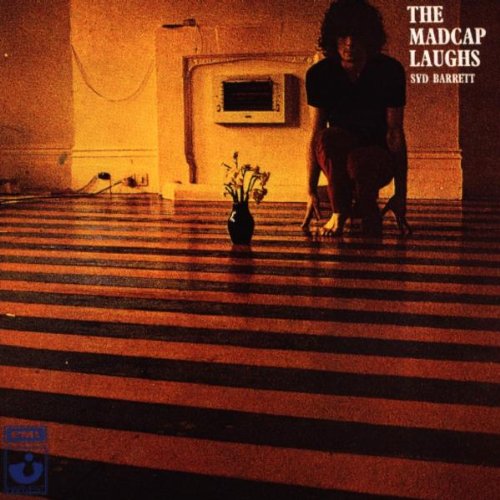
Syd Barrett Album: «The Madcap Laughs»
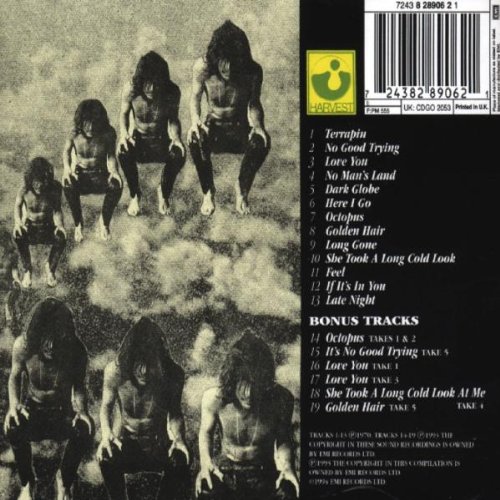
- Customers rating: (4.4 of 5)
- Title:The Madcap Laughs
- Release date:2002-04-16
- Type:Audio CD
- Label:EMI
- UPC:724382890621
- 1 Terrapinimg 5:06
- 2 No Good Tryingimg 3:28
- 3 Love Youimg 2:31
- 4 No Man's Landimg 3:04
- 5 Dark Globeimg 2:12
- 6 Here I Goimg 3:14
- 7 Octopusimg 3:44
- 8 Golden Hairimg 2:00
- 9 Long Goneimg 2:51
- 10 She Took a Long Cold Lookimg 1:56
- 11 Feelimg 2:37
- 12 If It's in Youimg 2:27
- 13 Late Nightimg 3:12
- 14 Octopus (Takes 1 & 2)img 3:10
- 15 It's No Good Trying (Take 5)img 6:23
- 16Love You (Take 1)img
- 17 Love You (Take 3)img 2:12
- 18 She Took a Long Cold Look at Me (Take 4)img 3:21
- 19 Golden Hair (Take 5)img 3:56
There is no question that Syd cuts a fascinating figure, full of loss and mystery. But, set the personality stuff aside - something you should do with everything you listen to - and pay attention to the music.
First and foremost, intentionally or not, Syd's lyrics are high art. Not self-conscious, referential and elitist nonsense. These lyrics are poetry, and poetry can only result from experience. We don't need to know or speculate about that experience, we need only comprehend that it somehow resulted in some amazing work.
The music is the perfect match for the words. The feeling of accident, of the joy of finding the right note and the frustration of being just sharp or just flat, a split-second early or a half-second late, is all there to hear. It brings a remarkable one-to-one feel to the music, somewhere between the rehearsed and the improvised, and it never comes off as self-conscious or calculated.
What are the influences? I can't detect any -- short of the James Joyce poem made into the song "Golden Hair". Has anyone else ever given us this specific combination of intent and accident? None that I'm aware of. The Madcap Laughs and Barrett both work because the artist we're listening to is a natural at what he does. Whether the drugs heightened his ability or killed it hardly matters now. The work is still here, still with us and like all lasting art, it resists classification and interpretation. Let's just say that whatever life brought to Syd, his particular nervous system had a singular way of transforming it into the transparent and immediate experience of a music all his own.
Ok, so it's more like disintigration on CD these days. Syd Barrett's first solo album is the work of a man completely falling apart. As the founder of Pink Floyd, Barrett ingested enough LSD to drive a medium sized country mad, and by 1968 and 1969 (when this album was recorded) his mental state was very schizophrenic. Even with these problematic mental disorders (or maybe becasue of), Barrett managed to create a classic.
Following Barrett's dismissal from Pink Floyd in early 1968, the band's managers followed Barrett, assuming that the band could not survive without their creative light (oops). While time has obviously proved them wrong, they soon set Barrett to work with producer Malcomb Jones and the trippy combo The Soft Machine to create a pop album. Barrett's performances soon proved to be erratic and strange, and it was soon apparent that the music was not going to set the teen scene on fire. The sessions were shelved (although temporarily as many tracks are included on the album) and "Octopus" was unleashed as a single. It unsurprisingly did not go far.
Cut forward a few months and former bandmate Roger Waters and Syd's own replacement David Gilmour wheel Barrett back into the studio for some more fun and games. These sessions were acoustically based, and allowed Barrett to do pretty much whatever he wanted to do, even if it was endlessly strange.
The final album is a somewhat daunting listen, but quite phenomenal if you can get your mind into Syd's world, where things like rhythm are rather amorphous. "No Good Trying," "No Man's Land," "Octopus," and "Late Night" are strange but amazing masterpieces of psychedelic rock. On the first two especially, the backing musicians sound like they're furiously trying to keep up with Syd (no good trying?) and the music is always on the verge of flying apart at the seams in a wonderful and interesting sort of way. "Terrapin," "Dark Globe," and "Golden Hair" are the more acoustic classics.
Now I'm guilty of a bit of blasphemous resequencing in regards to my own copy of "The Madcap Laughs." I've taken out "Feel" and "If It's In You," which I think qualify as acoustic shambles, and replace them with "Opel" and "Silas Lang." These are outtakes from the Malcomb Jones sessions that I think are amazing (especially "Opel") and bewilderingly left off the album. They can be found on the otherwise hit or miss odds-and-sods complation "Opel."
Although more expensive, I heartily recommend the EMI reissue of this disc. The remastering is far superior to Capitol's disc, and the alternate takes are illuminating. Barrett never played a song the same way twice; that was likely part of his madness. Better yet, get all of Barrett's remastered studio legacy in the "Shine On Crazy Diamond" box set (which may be a bit difficult as I think it's out of print).
The Madcapp Laughs was Syd Barrett's first solo album after his crazy behavior caused him to leave a position as leader of Pink Floyd, then a London club act with playful psychedelic pop songs, written by Barrett and a promising future. It was an attempt by his record company and his former bandmates, producers, Roger Waters and David Gilmour to get Barrett on the track to the bright career all had thought this obviously unique and gifted songwriter had. It would be unsucessful. Another solo album, even more brittle and less coherent would follow in 1970 and any attempt to perform with or record Barrett would be disasterous.
As Barrett was still mentally fragile while this album was recorded, only Terrepin, Here I Go and Octopus were songs that had his Floyd singles' joyous flair. Most others were slow, brittle songs which were impossible for his collaborators to do much with, which is the likely reason as to why only about half of them include Barrett being accompanied by other instrumentalists. A suite of three solo particularly strange and tormented acoustic songs, She Took a Long Cold Look, Feel and If It's In, included several moments of banter from the control room and Syd asking to start again, almost as if humor were one of few ways to deel with the frustrations of working with such a withdrawn man.
Some listeners may be annoyed by the album's lack of production value and the songs' sketchiness. Dark Globe clocks in at under two minutes and consists of an acoustic guitar and Syd singing/babbling with lyrics that remains cryptic at best but within this skeleton of a song, one is privy to Barrett's mind set. "I'm only a person with Eskimo chain/I tattooed my brain all the way.../Won't you miss me?/Wouldn't you miss me at all?" It's as almost as Barrett was no longer able to phrase thoughts in a normal manor after his mental breakdown three years earlier, the result of possible LSD, the pressures of Pink Floyd's mounting success and/or some previous psychological problem. Other songs such as Late Night ("When you showed me your eyes/whispered low of the skies/then I wanted to stay with you/inside me I feel alone and unreal/and the way you kiss will always be/a very special thing to me...") and Long Gone ("And I stood very still by the window sill/and I wondered for those I love still/I cried in my/mind where I stand behind/the beauty of love's in her eyes/She was long gone, long, long gone") show torment that make it difficult for listeners not to feel at least curious of Barrett. Like Nick Drake's Pink Moon, this album accidentally allows the listener a glimpse into the performer's mind. The blurred lyrics and fragile strums of the acoustic guitar prove a fascinating experience for those who have already joined the cult following of this erratic, charismatic young musician.
I've put off reviewing this album for a long, long time. This album changed the way i view music forever about 8 years ago. I had read about Syd Barrett in a guitar magazine when i was about 19 and they described him as the floyds original brilliant singer/guitarist/songwriter, i thought WHAT?, there was a guy before Waters?, Gilmore?. Being a casual PF fan at the time I was intrigued to find out about this Syd guy wrote all of the bands early singles ( "Arnold Layne" and "See Emily Play" great songs ), the first album, then basically nothing, until i found out that he done 2 solo albums. Living in the smallish town i did, there was no real alternative style record stores and the internet was still just begining to become a house hold thing, but one of the record stores we did have was able to order in the Syd Barrett solo albums, so i took a gamble as often people do with music and ordered in the box set, featuring TMCL, Barrett, and Opel. THEN upon recieving this the first cd i listened to was The Madcap Laughs, at first, i was extremely dissapointed, yeah, listening to this guy sing out of tune, bad production, out of time, i thought this is just a mess. NEXT cd Barrett, same, Opel, worse, then left it for a couple of days, maybe it was weeks, not sure, then came back and thought it can't be as bad as i first thought, and i was right. In goes TMCL and though there was no lyric booklet i began listening to these strange but intensely captivating and original lyrical twist and turns, every song had them, pick any song. "Oh where are you now pussy willow that smiled on this leaf" Dark Globe, and then sing with perfect clarity, "inside me i feel , alone and unreal, and the way you kiss will always be a very special thing to me" on late night, there are so many different lyrical approaches, one must have repeated listens to fully appreciate. The moods too, are all here, the funny story which is "Here I Go" and sad and desperate "Long Gone". Not to forget even though Syd would go out of time and tune sometimes, he would keep perfect tune and key for songs at a time, "Love You ", Terrapin", "Octopus", but then when recorded on a bad day, he couldn't nail a thing, "If it's in you" is a funny and sad in the same song example. This is about as honest as music can get in both a good and bad way, but always honest, Syd was no fake, even if this was unintentional, yeah sure people can say his instabilty musically and personally was due to drugs or whatever because on Pink floyds debut PATGOD, the bad timing, out of tune vocals, were non existant cause his drug problem hadnt affected him noticebly and thats a valid point, and to think if he was in better shape mentally at the time, and the production and playing had more time these could of been even better, but Syds solo albums were what they were because of the faults, because the talent is obviously there, but the faults stand out just as much. Though Syd was falling apart at the time he still had the drive, talent, and passion for his music, in which he had only one more album left in him after as this, ("Barrett" a different but equally brilliant album). Once being captivated by Syd Barretts "The Madcap Laughs" album, you will be changed forever on what music can be, and is. Whether that remains a postive and experience of growth as mine was or worthless experience is up to you and who you are, But this album is timeless, whether you like it or not. Syd Barrett achieved what he did before he was 25, which was, come in say what he had to say, make your mark, and be done with it, now he's recently past away, his story is finalised, R.I.P Roger "Syd" Barrett, you and your music will not be forgotten.
One could argue that Syd Barrett never intended for his 1971 first solo debut to be as hauntingly intimant as it is. Perhaps the former Pink Floyd frontman was only attempting to channel the charisma and playfulness of his work with the Floyd and accidentally discovered the outstanding starkness of the Madcap Laughs while attempting peel through the layers of brain damage, frustration and psychotherapy to find his knack again. Either way, Barrett created a disturbingly compelling work.
The Madcap Laughs presents the post-breakdown Barrett; the slow-strumming, word-slurring, red-eyed depressive who was briskly engulfed by the pressures of rock stardom and the effects of LSD and then passed through the revolving door of underdeveloped 60s psychotherapy. A restructured identity does not mean Barrett has lost all of his boyish, poprock charm. Although the production is much scratchier than that of Floyd, the album�s first side somewhat brings back that psychedelic Ray Davies who made Pink Floyd�s lush debut, the Piper at the Gates of Dawn so fine. There�s just something more manic, more downbeaten about the work that reflects Syd�s state of mind, such as the chronic mumbling of �Here I Go� and �No Man�s Land� or the Prozac cheerfulness of �Octopus� and �Love You� or the more direct pleas of �Dark Globe.� (�My head kissed the ground/I was half the way down/Treading the sand/Please, please, please lift the hand/I'm only a person with Eskimo chain/I tattooed my brain all the way/Won't you miss me?/Wouldn't you miss me at all? �).
In a way, this frantic first half hooks listeners into Syd�s colorful world and works to effective drudge them through the bleakness of the second. After the perky �Octopus,� Syd adds music to a James Joyce poem with �Golden Hair� and feverishly shrieks for a departed lover on the breathtaking �Long Gone.� What follows is probably some of the oddest music of the psychedelic age. With a sole, brittle, acoustic guitar and practically no involvement from producers, Syd murmurs through the song-suite of �She Took a Long Cold Look,� �Feel,� and �If It�s In You� almost incoherently tossing shaky phrases like �broken pier on the wavy sea,� �the end of truth,� �inside my eye be the lonely one, my bride� and �skeleton kissed the steel rail� in a primitive word-bath. The listener wants to cheer the songwriter who charmed him or her so effectively on �Terrapin� and �Here I Go,� he or she wants Syd to think a happy thought or a sensible expression but the words are too dismal and the speech too blurry to appease any hopes.
The suite is complimented, but not outdone by the album�s wailing, forbidding closer, �Late Night,� a song that effectively sums up the feel of this somewhat accidental masterpiece: �When I lay still at night seeing/Stars high and light/Then I wanted to be with you/When the rooftops shone dark/All alone saw a spark/Spark of love just to stay with you/Inside me I feel alone and unreal.�