


Santana Album: «Lotus»
Santana Album: «Lotus»
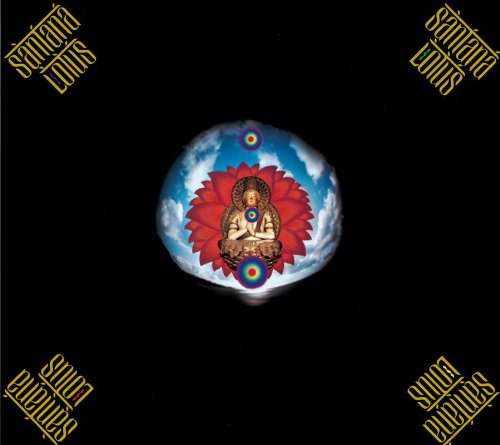
- Customers rating: (4.5 of 5)
- Title:Lotus
- Release date:1991-02-26
- Type:Audio CD
- Label:Sony
- UPC:074644676426
- 1 - 1Going Home
- 1 - 2A-1 Funk
- 1 - 3Every Step Of The Way
- 1 - 4 Black Magic Womanimg 6:42
- 1 - 5Gypsy Queen
- 1 - 6 Oye Como Vaimg 4:18
- 1 - 7 Yours Is The Lightimg 5:49
- 1 - 8 Batukaimg 3:27
- 1 - 9Xibaba (She-Ba-Ba)
- 1 - 10Stone Flower (Introduction)
- 1 - 11 Waitingimg 4:04
- 1 - 12Castillos De Arena, Part 1 (Sand Castle)
- 1 - 13Free Angela
- 1 - 14Samba De Sausalito
- 2 - 1Mantra
- 2 - 2Kyoto
- 2 - 3Castillos De Arena, Part 2 (Sand Castle)
- 2 - 4 Incident At Neshaburimg 6:32
- 2 - 5 Se a Caboimg 2:53
- 2 - 6 Samba Pa Tiimg 4:43
- 2 - 7Mr. Udo
- 2 - 8 Toussaint L'Overtureimg 6:00
Many complaints have been lodged against this album including comments regarding the excess length of songs, the constant noodling, the missing presence of Carlos Santana, the lack of an overall melody, and poor sound quality.
To begin with, the length of the songs is excellently chosen. And believe it or not Supernatural fans, each song is well planned out. Most reviewers who have a beef with this album's length don't like jazz to begin with, and desire that Carlos keep within the bounds of his late 60's and late 90's hit making three minute song machine. The greatness of Lotus is its ability to take all of Carlos' beautiful melodies and expand them each into a whole new creation.
Despite the extended length of songs on Lotus, there is no excessive noodling. Each solo has a central rhythmic and melodic structure that was used to express in a moment what can never been repeated. Unlike earlier Santana albums, Carlos allows other musicians (i.e. excellent keyboards and Latin percussion) to express beautiful melodies over a palette of amazing chord progressions and tight rhythms. In addition Carlos is in his best recorded form, from the subtlety displayed on Samba Pa Ti to the incredible Incident at Neshabur. Lotus is pure genius if for nothing but the second disk of material. Carlos' guitar tone on Lotus is perfect in its ability to express cleanly when played gently and fire up when played with great passion.
Lotus is one of the single greatest achievement in guitar playing in terms of Santana's ability to harness and realize the melodic powers of the guitar. No other guitarist I have heard (Jimi, Django, Allman, Clapton, Beck, and even McLaughlin) has unlocked the mystery of a melodic, singable solo more completely than Carlos Santana did on this record.
In regards to the recording quality and mix, I believe it to be one of the best live album ever made. This album is not meant to sound up-front like a studio album or have lots of crowd noise like live albums made in the late 70's till today have. Lotus is meant to sound endless and reverberate with great warmth. The mic positioning, engineering, and mixing is top notch. Every instrument is balanced and every subtlety is audible and clear. If you have never tried to mix a live album, you would never know how hard it is to achieve the level of warmth and tonal quality Lotus produces.
Lotus is near the top of recorded music of all time. Many years after "Smooth" is forgotten, future generations and historians will look upon Lotus as one of the most important achievements in modern music history.
Lotus is a dream come true. A recording of two Santana concerts in Osaka, Japan in support of Caravanserai, it blends songs from the group's then-current (mid-70s) jazzy period with old favorites, and is dished out by both the "New Santana Band" of the time and the "Old Santana Band." Yes, a live Santana CD with Michael Shrieve, Chepito Areas, and Armando Peraza (New) all on percussion! Tom Coster remains most prominent with his Hammond organ, but Lotus also features Richard Kermode (New) on keyboards. In substance, only one song from Caravanserai is included, a great version of "Every Step of the Way," but Welcome is represented by "Samba de Sausalito" and the pretty "Yours Is the Light." Coster bedazzles on the rockers from the first three albums as well as Airto's Brazilian jazz "Xibaba," one of the best moments in so many great ones. There is a 16-minute, unforgettable version of "Incident at Neshabur," with an extended, lovely coda--What more could you ask for? Carlos's superpowered guitar is mesmerizing, always; the entire atmosphere is otherworldly, dark, beautiful, modern jazzy (there is also a nod to Chick Corea), and most of all, electrifying. Early Santana and Lotus rule.
Paul Henderson's review criticises this record largely because of a certain lack of vitality. I agree that this can be interpreted here, but largely because of the mix, which is awful. Much as I love Santana's guitar playing, it's *way* too upfront in the mix. The keyboards against which he is playing and relying on for harmonic inspiration are buried and sound tinkly and twee. That can lead to the impression of a lack of vitality. A remix would change his opinion, I'm sure.
As for me, I re-mix the album in my head every time I listen. It's a *great* record. Incident at Neshabur, as the band breaks out from the slow ballad section and slowly builds to a crescendo, is fantastic. I've rarely heard Carlos Santana play with more speed and inventiveness than on the extended Gypsy Queen.
I could go on. The general hindsight view of Santana's career is that he/they began to go astray after the first three albums, and that the jazzy experimentaions were a mistake from which they never fully recovered...
My own view is that these excursions (Caravanserai, Welcome, Borboletta and Lotus) were the zenith of Santana and that they only began to go off the rails when they balked at the lesser (though still extremely healthy) record sales and went back to trying to be popular with Amigos etc.
This is Santana captured at their very peak. Just after Caravanserai and just before Welcome. BUY IT!!
This must be the best of all the Santana albums. Dating from the time when the band moved from being an outstanding latin-rock outfit to being an outstanding latin-rock-jazz outfit, it is easily the match of Caravanserai, Welcome, Borboletta and Love Devotion & Surrender etc (with McLaughlin) from this period. The edge that this recording has are the keyboard interplay of Coster and Kermode and Santana's guitar. Too often a live album is just cashing in with a poor quality reverb heavy recording of studio material with the added annoyance of audience noise. In this case the recording is superb and there is none of the inane whooping, whistling and hollering that spoil too many live shows. Additionally, it is very unusual in the rock world to hear anything approaching improvisation in live performance but this album is one of a few notable exceptions. Beatles refrains and other references are thrown in for added interest in some of the longer solos.
The early 70s was a period of spiritual involvement for many musicians. For Carlos Santana (as well as his soulmate John McLaughlin of the Mahavishnu Orchestra) this brought a new and intense fire to the playing that would soon exhaust itself, but which is happily preserved on a handful of great records. On Lotus (1973) all of Carlos' trademarks are in place (the minute-long sustain, the furious glissandos), but not yet reduced to cliché. Never again would his guitar spit liquid fire like this!
The rest of the band is great too, with veterans Shrieve and Chepito Areas in top form and the twin keyboards of Coster and Kermode weaving colourful webs behind it all. The music is mostly instrumental - a few more vocal tracks would have been welcome (although with the vocalists in question you have second thoughts...). There is much inspiration from the fusion jazz of the period (which Santana undoubtedly influenced back) and some of it sounds rather dated today. Still, 5 stars for the guitar solos alone..!