


Santana Album: «Festival»
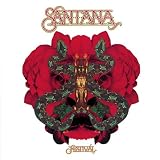
Santana Album: «Festival»

- Customers rating: (4.2 of 5)
- Title:Festival
- Release date:1990-08-20
- Type:Audio CD
- Label:Sony
- UPC:074643442329
- Average (4.2 of 5)(20 votes)
- .9 votes
- .7 votes
- .3 votes
- .1 vote
- .0 votes
- 1 Carnavalimg 7:37
- 2 Let the Children Play3:28
- 3Jugando2:12
- 4Give Me Love
- 5Verão Vermelho
- 6Let the Music Set You Free
- 7Revelations
- 8Reach Up
- 9 The Riverimg 4:54
- 10Try a Little Harder
- 11Maria Caracoles
Every time Carlos Santana comes out with an album that is not what most people consider mainstream or typical of what he has done in the past, he gets critized badly(never mind that it might be good). Some of his best tunes don't get air time (Treat, Samba Pa Ti, Touissant L'Overture, Song of the Wind, Europa, Baila mi Hermana, etc.) This album is one of those, along with Borboletta, Amigos, Inner Secrets, Marathon, etc. Carlos Santana comes from a very rich musical background that unless you grew up in it, would be hard to understand. In Latin America you get to listen to Salsa, merengues, samba, cumbia and countless other latin rhythms plus the Afro and European influences and also Jazz and rock. For example take the song Maria Caracoles in this album, this was a very popular song in Cuba during the sixties made popular by Peyo El Afrocan, it was a rhythm called El Mozambique. Although Carlos( and his brother Jorge) has a tone on the guitar that is unmistakable. The phrasing and feel is very common in Latin music specially in romantic songs or Trio music. Listen to Los Panchos, trio Matamoros, Los Tres Aces and my favorite Los Tres Caballeros and you will know what I mean. If you are a Latin person over forty you will relate to a lot of Carlos phrasing even if it is a new tune. Flor D'Luna from Moonflower is typical of this. This Festival album from the seventies is very enjoyable. If you keep an open mind you will like it too.
Festival displays the always-fine guitar of Carlos Santana and the keyboards of Tom Coster, and has some high points. There are two standout pretty tracks: the acoustic, Brazilian (and sort of flamenco) "Verao Vermelho" and the haunting "Revelations," with its fine guitar work speeding up, as in "Europa." The lively "Carnaval" and "Jugando" contain excellent performances by Chepito Areas and the rest of the percussion section. However, these songs and others, verseline and music, lack the edge of Santana's earlier days, instead showcasing plain-sounding Latin rhythms, and the other softer songs are of lesser quality. In addition, Carlos' latter-day inclination to delve into mediocre funk pops up on a number of tracks, not of interest to me, and many. Santana would display a brief return to form on the studio tracks of the immediately subsequent Moonflower, but Festival is another example of the phasing out of the excellent sound of the group's first six years.
First off, this album should have been merged with Amigos, since Festival was released the same year as the masterpiece Moonflower. If the mediocre tracks on both albums were taken out, and the superb tracks were left in, what you would get is a extremely good album.
The first four songs on the album are great, but things kind of go down hill on "Verao Vermelho." I don't see what people like in this song. "Revelations" is a breathtaking piece of music. Reach Up and The River are mediocre, but the album ends on the plus side with the "feel good" track Try A Little Harder" and the dance classic "Maria Caracoles."
Chepito Areas returns on his last studio performance with Santana. He would come out in the live tracks on Moonflower.
The drummer does an "alright, so-so" job. Ndugu Chancler did a better job on Amigos, and he should have stayed for Festival as well. But no one can even come close to Michael Shrieve. If he would have stayed to play on festival with Chepito Areas, this album would have been much better.
Overall, minus some cons, this album is recommended.
I'd just like to say that 20+ years ago, this was my very first introduction to Santana and Latin music in general - a mere child, someone inadvertently left their 331/3rpm Festival Album at my house - which I (hands up here) admittedly snuck into my bedroom to play on my mini radio/record player and fell totally in love with Carlos Santana (PS I still have the LP!). From that day to this have been and will always be an avid fan, so don't listen to any reviews about his old music being naff or not a patch on today's current mainstream stuff, this is where it all began remember, buy it, listen to it, savour it and above all ENJOY it! If you're not sure about Santana, this is an ideal introduction.
As it turned out the all around success of
proved to be yet another stepping stone for Carlos Santana. Even there you could see something was happening. Apparently more than aware that his jazz ventures during the early to mid 70's distanced him from some of his original latino Santana were apparently seeking to remedy that to a degree with his particular album. While keeping Tom Coster ondoard Ndugu is replaced by Gaylord Birch and Alex Ligertwood is replaced in the vocal department by singer/songwriter Leon Patillo. Overall there's a sense on this album of in fact taking something of a late 70's approach to their earlier jam style of music. Even when some of the older styles the previous album embraced are bought to the surface,pop considerations are not generally put on a very high priority. But as always Carlos goes for the musical and audience communication end of the spectrum. And on that end he almost always wins out.
The opening of "Carnaval","Let The Children Play" and "Jugando" set the tone-shorter songs with fiery percussion and the usual communicative level of soloing from Santana and everyone else. "Give Me Love",written by bassist Pablo Tellez and sung by Leon Patillo is the one major pop oriented song here,a funk/pop ballad in the EWF/Charles Stepney style that acts sort of as a cooling of point from the heaviness that begins the album. On "Let The Music Set You Free" Carlos let's his inner Sly Stone loose with a rocking,organ based funk jam with a message that's vital and stays thoroughly on the one. "Reach Up" does much the same thing,actually pointing a bit towards the funk sound of the previous album. "The River" is another poppier ballad,this time with more of a stripped down style 70's windy city soul flavor. "Try A Little Harder" brings it all together for a strong latino/funk hybrid and is one of the albums strongest songs. That latin flavor continues on "Verao Vermelho" and "Maria Caracoles" wheres "Revelations" continues in the sparse spiritial theme.
Operating from a much wider musical pallet and bring with a different range of ideas than what came immediately beforehand this album all too often gets thrown into a rubbish pile of "Santana albums no one wants to hear". Sure some of it might have to do with his embrace of funk as an art form when it's generally a genre that gets laughed at by all too many in the elitist rock and jazz circles. But because of the fact Santana was based out of San Francisco says a lot about this. Carlos himself definitely had the advantage in being able to discover the "message in the middle of the bottom" as to where the rock,jazz and latin music that inspired him led him into creating. Also his spiritual journey at the time was leading him further down the jazz-funk road and more towards a creative path than a commercial one. All the same Columbia gave him every chance they could and while not always commercially satisfying albums such as this give one important insights into Santana's inspirations,on many levels small and large.