


Phil Collins Album: «Face Value»
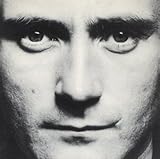
Phil Collins Album: «Face Value»

- Customers rating: (4.4 of 5)
- Title:Face Value
- Release date:1990-10-25
- Type:Audio CD
- Label:Atlantic
- UPC:075678148026
- 1 In the Air Tonightimg 4:54
- 2 This Must Be Loveimg 3:35
- 3 Behind the Linesimg 3:40
- 4 The Roof is Leakingimg 3:17
- 5 Dronedimg 2:50
- 6 Hand in Handimg 9:48
- 7 I Missed Againimg 3:56
- 8 You Know What I Meanimg 2:34
- 9 Thunder and Lightningimg 4:14
- 10 I'm Not Movingimg 2:36
- 11 If Leaving Me is Easyimg 7:24
- 12 Tomorrow Never Knowsimg 4:53
Regardless of how much criticism Phil Collins has received over the years for his solo career and for "what he did to Genesis", serious music listeners know better, and Phil's timeless, remarkably eclectic solo debut "Face Value", which came out in early 1981, is a masterpiece. It's an album that makes good on the theory that an artist does their best work in times of personal turmoil. Phil simply began 'fooling around' as a means to comfort himself in the wake of a painful divorce. Apart from a cover of the Beatles' "Tomorrow Never Knows", a retooling of the Genesis song "Behind the Lines", and a brief uncredited acapella snippet of "Over The Rainbow" at the very end of the record, Phil wrote everything here himself, and not only is his songwriting consistently terrific, Phil is really all over the map stylistically, and yet, somehow it all holds together beautifully. That said, this ain't some run-of-the-mill soft rock or adult contemporary album.
Even with all of the brilliant songs Phil has written over the course of his career, the first track here, "In the Air Tonight", remains a signature song that's perhaps his most enduringly popular, and for good reason. Although the idea of suddenly switching from a very quiet part to an ear-blastingly loud part was not a new one, the song is staggeringly powerful and was a very innovative production, containing ominous drum machine, creepy synth, atmospheric Fender Rhodes, vocoder, violins, smoky electric guitar (played by long-time Collins and Genesis cohort Daryl Steurmer), heavily echoing vocals, and of course, those ferocious, booming gated drums. Add to that the haunting lyrics and melody (I won't even get into that whole urban legend about the lyrics), and Phil`s passionate, tormented wailing on the fade, and you get one of the most cathartic songs ever recorded. Year after year goes by, and "In The Air Tonight" continues to just sound so damn cool everytime it comes on. It's a rare song in that I absolutely never get sick of it.
But the genius doesn't stop there. Side 1 of the album (i.e. the first six tracks in its vinyl release) is often very quiet, such as on the starkly affecting "The Roof Is Leaking" which seems to be about the hardships of a family living in the US in the mid 1800s, and has Phil's vocals backed by just piano, banjo, & slide guitar. The wistful "This Must Be Love" is a wonderful, mellow love song with excellent backing vocals from Stephen Bishop, whom Phil was a great admirer of--he even slips the phrase "never letting go" into the song, the title of a Bishop song. He gives a finger-snapping horn-laden treatment to "Behind the Lines", the Genesis version (also excellent) of which had appeared the previous year on "Duke". "The Roof Is Leaking" segues into the dramatic, fast paced wordless piece "Droned" which gives way to another instrumental-plus-wordless-chanting track with the feel good "Hand In Hand" (which features a children's chorus). Some pretty adventurous stuff indeed, and not exactly busting with "radio fodder" either--it's easy to see why Phil was surprised at the album's huge commercial success. It seems that "In the Air Tonight" simply captivated the public, and carried the rather uncommercial album.
The first song on `side 2' didn't hurt either though. "I Missed Again" was also a hit, and it's a hook-heavy song that brilliantly 'updates' the sound of '60s Motown for the '80s, with bright-sounding horns and uncanny, sophisticated chord changes. Again, this tune just absolutely never gets old for me. I'm hard-pressed to keep from singing along everytime I happen to hear it come on the radio.
"You Know What I Mean" is a gorgeously melodic and tender ballad which segues into the defiant, catchy kiss-off song "Thunder and Lightning". The following track, the musically and lyrically contemplative "I'm Not Moving", is another big personal favorite of mine, a little marvel of a song, clocking in at well under 3 minutes (although Phil himself seems to think little of this song these days, as it doesn't even get a mention in the DVD that chronicles the making of the album, which I mention later). The extremely sad, but hopeful love song "If Leaving Me Is Easy" is terrifically soothing --it has atmospheric strings, Fender Rhodes, and high falsetto vocals from Collins--rarely would you hear Collins' voice get this high on record ever again after this album.
He then gets psychedelic for "Tomorrow Never Knows", which he does in a slower rendition than the Beatles version. Phil has explained he wanted to perform this song in a more melodic manner than the Beatles original, and it also has ominous, cathartic looping drums, and punchy Collins vocals. I don't think it's a stretch to say it's the best cover of a Beatles song ever recorded, and personally I think it beats out the Beatles version.
Phil tacks on a brief reprise of him singing "Over the Rainbow", which I have heard is intended to be a tribute to John Lennon, who was murdered right around the time "Face Value" was being completed. The cover of "Tomorrow Never Knows" itself though was something Phil had already wanted to do, as Phil has stated that he already had the whole track completed well before Lennon was killed.
The production of this album, by Collins and assisted by Hugh Padgham, is masterful and supremely tasteful, and in the end, this album is truly timeless. Phil puts himself into the recording, and he ends up with an album that is oozing with deep feeling and is all the better for it--"Face Value" is a brilliant album from one of the finest artists the so-called 'rock era' (I'd even go as far to say, of all time). Although this CD version is not an "original recording remastered" version of the album, the sound quality is still truly excellent, a testament to how well it was originally recorded--I think a lot of the credit should go to engineer Hugh Padgham, who continued to work with Phil and Genesis with glorious results on subsequent '80s releases. I highly encourage you not just to get this album (if you don't already) since it's absolutely essential, but also the "Face Value" DVD that's part of the "Classic Albums" series--it prominently features Phil himself, including performances from him, and it's a terrific look at the making of this incredible work of art. The 1993 Gold CD version (pretty hard to find at this point and probably quite expensive) is also a wonderful item, with fantastic sound quality, excellent liner notes added, and a faithful reproduction of the original gatefold album that is missing from the 'standard' CD edition.
It's a shame that most people only remember the signature drum beat at the end of In The Air Tonight, because Face Value is much more. The album reverberates with a powerful depth and intensity stemming from the breakup of his first marriage - you can feel the intensity oozing thorugh every song, though especially on the opener In The Air Tonight and the closer Tommorrow Never Knows (which in my opinion blows away the Beatles' original). As much positive press as it recevied (Phil did win a Best New Artist Grammy), except for In The Air Tonight and I Missed Again, Face Value is still an underrecognized album. It's a shame that most people don't know about standout tracks like I'm Not Moving, Thunder and Lightning, and Tomorrow Never Knows. Buy and listen to a great rock album.
Phil Collins' reputation has suffered substantially over the past twenty years. He may not have been mentioned by either David Brent or Alan Partridge, but it feels like it. Many Genesis fans haven't quite forgiven him for admitting that, before the 'We Can't Dance' album, the band deliberately decided to "sell out", in his words. Maybe it was the rapid drift towards MOR in his solo albums, the chain of failed marriages, or simple jealousy of his money-making, but the critics have not been kind to our Phil in recent years.
I bought this as an LP when it first came out, and have now bought it as part of the new 3CD pack released in 2004 that is excellent value. I must admit I hadn't played the album for 20 years, and it really takes me back. In 2001, his stock was really high: he had been a fantastic vocal replacement for Peter Gabriel in Genesis, and he had won critical acclaim for his spare-time band, the jazz-rock specialists Brand X. So what if he did the odd cover of a Motown hit, or did the occasional pop video? It just added to the fun, and potentially seemed capable of bringing a mainstream audience to jazz-rock.
People coming to 'Face Value' for the first time may wonder what the dominant style is, 'In the Air Tonight' apart. And the answer is jazz-rock. Well, one band in particular: Weather Report. Listeners are strongly advised to buy that band's 'Heavy Weather' and 'Black Market'. (It is no coincidence that Genesis's concert drummer was Chester Thompson, who had also played drums on 'Black Market', nor that the bassist on that album was Al Johnson, who also plays on 'Face Value'.) Basically, 'Face Value' was a popularised version of Weather Report, updated with vocals and drum machines.
(Incidentally, the following year, long before the Prince's Trust ever existed, Phil was invited to play alongside Eric Clapton on John Martyn's 'Glorious Fool' LP.)
But Collins has always been a great opportunist, and he was sensitive to whatever style of music that the greatest number of fans liked. So the jazz-rock tendencies disappeared from subsequent albums, to be replaced by the MOR fug. The trouble was that Phil was a fair singer, drummer, pianist and composer, without being brilliant at any one of these activities. It's no clear if he will be remembered another 25 years from now for anything except 'In the Air Tonight', and to be frank, engineer Hugh Padgham deserves much of the credit for the sound of that song.
Enjoy this album for what it hoped to achieve -- i.e. to bring jazz-rock to a larger audience -- and weep for the fact that the larger audience later pulled Phil away from jazz-rock and towards the MOR.
With the release of Genesis's Duke album, which featured "Misunderstanding," it was clear that the group was approaching the mainstream more and more. The next step would be Abacab, but before that, lead singer and drummer Phil Collins would release his first solo album, Face Value, an album of longing that also details the emotional wasteland of a sundered relationship. As if to test the waters, he did a more pop updating of "Behind The Lines," originally on Duke, with speeded up vocals and a snazzy brass section (as opposed to the soundscape of Tony Banks' keyboards, such as the instrumental opening) that would become a calling card on his subsequent solo albums.
Two singles from that album both reached #19 on the charts. The first one was the upbeat "I Missed Again," highlighted by a strong brass section. The other, "In The Air Tonight," a UK #2, is one of Collins' signature tunes, with its moody and atmospheric keyboards highlighted by Collins' haunting vocals, and the snarl of Daryl Steurmer's guitar. The chorus itself has an eerie echoing effect that matches the minimalist sound, as does the electronic gimmickery of the vocals. The song and sound then burst to a crescendo when Collins lets loose with the drums through the rest of the song.
There are other surprises present, such as the instrumental "Droned," which begins with a slow piano and violins, an airy soundscape, before going full throttle with an uptempo conga and piano section, the violin turning more folky, and Collins' vocalizing proving that Peter Gabriel doesn't have the monopoly on droning vocals. That yields to "Hand In Hand," beginning as a sci-fi Giorgio Moroder-type instrumental (think Metropolis soundtrack) that features the Children from the Church of LA as a choir, before launching into an uptempo brass and piano soul number. "I'm Not Moving" is the closest thing to disco Collins would do until "Something Happened On The Way To Heaven" nearly a decade later,
One of the other highlights is the piano and strings of the post-breakup tune "You Know What I Mean," the emotional devastation which can be felt: "leave me alone with my heart/I'm putting the pieces back together again/just leave me alone with my dreams/I can do without you..." "If Leaving Me Is Easy," with its sad sax, is another melancholy song along the same vein, but this time through the presence of old letters and the false front one put with friends. Collins' pain is felt through the strained vocals, as he sagely sings the refrain in an eerie falsetto, "if leaving me is easy, going back is harder."
"The Roof Is Leaking" details the hardships of a rural family living in poverty, but with the hope of the coming spring. Daryl Steurmer is on banjo here instead of his usual guitar. Other songs are more optimistic, such as the slower and leisurely melodic "This Must Be Love." My opinion on his cover of the Beatles' LSD-influenced "Tomorrow Never Knows" is mixed, as nothing compares to the original, but I do credit him with the swirling noise and sound bursts that duplicate another kind of trip. And if one listens carefully at the fade-out, he sings a snatch of "Over The Rainbow."
At this point, Phil Collins had enough to create a different sound from the one he was doing with Genesis, and it shows in his wondrous solo debut.
"Face Value" remains the freshest, if not quite the best, music Phil Collins has made solo. Bringing his prog-rock and jazz drumming technique along, adding a newly-found gift for balladry and R&B, Collins blueprints the style that made him a music/film/TV star for the next 20 years.
The Earth, Wind, & Fire horns, poured like catsup over future Collins sets, are peppered over tracks like "Thunder and Lightning," the Count Basie-ish remake of "Behind The Lines" and the instrumental "Hand In Hand." Two elegant, bitter ballads, "You Know What I Mean" and "If Leaving Me Is Easy" (later covered by the Isley Brothers), establish an approach to the style that Collins would later charge on like a platinum MasterCard.
Now a concert highlight, urban legend, and commercial jingle, "In The Air Tonight" is to Collins what "My Way" was to Sinatra or "Thanks For The Memories" to Bob Hope: a summary of public image rather than a musical statement. Heard again atop the stark, spare songs here, it regains context and power even as you air drum along. The more appropriate song that provides a signpost for Collins' career is the last, a tumbling, trippy remake of the Beatles' "Tomorrow Never Knows," closed at the fade with a verse of "Over The Rainbow." A prog-rock standard crossed with schmaltzy movie music -- now THAT's Phil Collins at face value. Recommended.