


Neil Young Album: «After The Gold Rush»
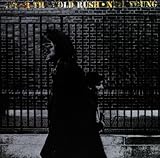
Neil Young Album: «After The Gold Rush»

- Customers rating: (4.6 of 5)
- Title:After The Gold Rush
- Release date:1990-10-25
- Type:Audio CD
- Label:Reprise / Wea
- UPC:075992724326
- 1 Tell Me Whyimg 2:58
- 2 After the Gold Rushimg 3:47
- 3 Only Love Can Break Your Heartimg 4:16
- 4 Southern Manimg 5:32
- 5 Till the Morning Comesimg 1:17
- 6 Oh, Lonesome Meimg 4:01
- 7 Don't Let It Bring You Downimg 2:58
- 8 Birdsimg 2:16
- 9When You Dance You Can Really Love
- 10 I Believe in Youimg 3:29
- 11 Cripple Creek Ferryimg 1:35
I'm not going to waste your time with a long winded review of one of the greatest albums of the last fifty years. If you are a fan then you know how good it is. If you are not a fan or unfamiliar with his work, then this 1970 album should do the trick. If it doesn't get you into Neil then nothing in his catalog will. I'm also not going to post the same review for all four albums released, this review applies to all of the newly remastered solo albums (Neil Young, Everybody Knows This Is Nowhere, After The Gold Rush & Harvest) with regards to sound quality.
I had a sneaking suspicion they were going to remaster his catalog since it took way too long for the Archives box set to come out, especially considering how little unreleased material was actually on it. To some extent the box set, in my opinion, was a bit bloated and padded to charge a higher price. In any event, it appears the real reason it took so long was due to the fact that they were remastering everything possible in his catalog and wanted to have it all ready to release in the same general time frame.
I mainly want to focus on the remastering of this album, which is absolutely incredible. The liner notes state it was remastered from the original analog tapes and was an analog to HDCD 24 Bit 176 KHZ digital transfer...uh...OK...sounds good to me! This album sounds so far superior to the original CD pressing that it made my weak car speakers sound like they had had a BOSE makeover. Upon hearing some of the album tracks on the Archives box set it was obvious how incredible they sounded and I hoped they would do the same treatement to his catalog. Each album is numbered in the order they were released and a label on the back states it's part of the "Neil Young Archives Official Release Series" so there should definitely be more to come. All of these remasters come in a standard jewel case and there are no bonus tracks.
The sticker on the outside of the packaging stated that it was "remastered from the original analog tapes...because sound matters", and they're right. Someday pre-packaged music will be gone to a large extent and the younger generation doesn't give a rat's behind about sound quality so we have to get the best sounding versions while we can. Yes, I'm getting old and crotchety, I admit it. Now get off my lawn!
This was the album the prolific Neil Young released right after his first flirtation with CSN&Y, and once again he shows just how wide and deep his musical talents are. All we aging sixties kids all have a copy of both this album and his "Everybody Knows This Is Nowhere" album; it is standard issue for older babyboomers. Indeed, out of the welter of so many artists with so much in the way of incredible and unforgettable music, Neil Young stands alone as a sixties icon, someone who has consistently done the music his way, and with great sincerity, consistent authenticity, and a singular verve. No one has produced the range and quantity of memorable songs and melodies, as has Mr. Young, who has always produced what he wanted on his terms, and has never sold out to commercialism or tried to appeal to the mainstream audience.
Here we have so many terrific songs like "Tell Me Why", "After The Goldrush", and his smash hit, "Southern Man", that it is hard to remember that this is just one of several such albums he released in short order over a three or four year period. IN a number of other songs, such as "Only Love Can Break Your Heart", which Linda Ronstadt later did a great cover of, Neil's genius and guitar virtuosity shines, as it does in songs like "Don't Let It Bring You Down", "Birds", "I Believe In You", and a personal favorite of mine, "When You Dance". Young may well be an iconoclast, someone who is unpredictable, unreliable from a business sense, and something of a prima donna, but he always plays straight from the heart (and groin), and one knows that the guy playing that axe so masterfully is absolutely in control of the incredible sounds emanating from it. Wow! Put this baby in the CD player and listen as the CD illustrates why Neil Young will never die! Long may his chrome heart shine!
Yes, it's a very good album. But the "editorial review" by Steve Knopper above the customer reviews is very annoying. He writes, "He's equally passionate with trippy riddles (has anybody figured out what 'We've got mother nature on the run' means in the title track?)."
Huh. Well. The line is actually, "Look at Mother Nature on the run in the 1970's." Gosh, what DOES it mean? That the environment is threatened by our species?
Neil Young's After the Goldrush stands as one of the most complete albums in rock N roll's mythology. He laces social commentary (Southern Man, After the Goldrush)with beautiful songs of anguish (Only Love can Break Your Heart, Oh, Lonesome Me). This album shows that Neil Young has few boundaries as an artistic voice. His backing band (Crazy Horse) lends a graceful accompaniment, but it's Young's show. Southern Man is quite frankly one of the most important rock songs of all time. It has a patented Young minimalist guitar solo and lyrics which cut straight to the heart of America's "silent majority" racist attitudes. Alternately, with Birds, Young still looks for hope through love. This album is essential for aspiring singer songwriters. All of the selections have a logical fit and tremendous aural dynamics. Young feels no need to create complex song structures; he bypasses this. His playing is emotive and instintive. The lush landscape resonates far after you stop listening to the pithy 30 minute gem. I wish he did a sequal to Goldrush instead of Harvest.
Just as Neil Young's ferocious second album was a dramatic contrast to his folksy debut, so is his third album, After The Gold Rush, a complete contrast to that. Certainly, his work on Crosby, Stills, Nash & Young's Deja Vu album may have lead him to dip his toe back into the waters of these folksy rockers, and he does a very fine job of it here. Some of his best soft, gentle, rolling acoutic numbers are here - Tell Me Why, When You Dance I Can Really Love - are here, complete with splendid rolling acoustic guitars and beautiful vocal harmonies. The beautiful, spirited title track is also a standout, with its gentle piano work, and perhaps Neil's finest vocal. The only real rocker here is Southern Man, one of Neil's most famous songs, and a fine little rocking protest - sparking Lynyrd Skynyrd's famous comeback in Sweet Home Alabama - with a spirited jam at the end of the song. Another highlight is the inspired run through the country standard Oh, Lonesome Me. Although, aside from Southern Man, the longish guitar jams that made Everybody Knows This Is Nowhere so great are completely absent from this album, we get instead Neil's masterful folk ditties, which are just as satisfying. Another major revelation - indeed, perhaps the highlight of the album, and certainly it's distinction - is the uniformly excellent piano work. Nils Lofgren - along with Neil himself and others - turn in fine performances on the instrument, lending such songs as the title track and Southern Man a distinctive air. Overall, one of the man's best efforts.