


Kitaro Album: «Spiritual Garden»
Kitaro Album: «Spiritual Garden»
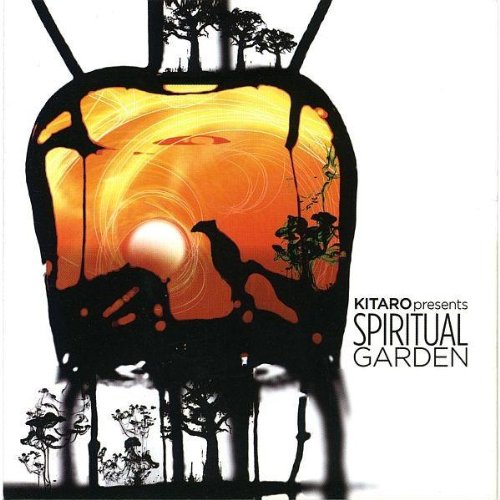
Kitaro Album: «Spiritual Garden»
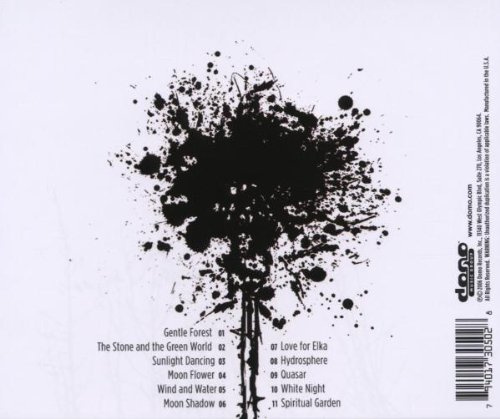
- Customers rating: (4.1 of 5)
- Title:Spiritual Garden
- Release date:2006-02-21
- Type:Audio CD
- Label:Domo Records
- UPC:079401730502
- Average (4.1 of 5)(10 votes)
- .6 votes
- .1 vote
- .2 votes
- .0 votes
- .1 vote
- 1 Gentle Forestimg 1:40
- 2The Stone And The Green World
- 3 Sunlight Dancingimg 1:40
- 4 Moon Flowerimg 3:16
- 5 Wind And Waterimg 1:40
- 6 Moon Shadowimg 1:40
- 7 Love For Elkaimg 1:40
- 8 Hydrosphereimg 1:40
- 9 Quasarimg 6:55
- 10 White Nightimg 1:10
- 11 Spiritual Gardenimg 4:37
First off, I must respectfully disagree with just about everything said about this CD in the editorial review by Amazon's John Diliberto. Actually, Mr. Diliberto's statements that the artists name is Kitaro, and the album's title is "Spiritual Garden", are just about the only points on which we seem to agree!...But hey, that's OK! Music listening can be a highly personal experience, and what seems boring to one person can be deeply moving to someone else...As for myself, I've found few recent albums to be as deeply moving as "Spiritual Garden". This CD features some of Kitaro's most introspective, nuanced, and, yes, "spiritual" music to date. Devoted Kitaro-philes will notice some new sounds, textures, and stylistic-touches floating around here, but they are seemlessly intermingled with the more familiar musical elements that we've come to expect. This blending of the old & new gives me the impression that this may well be a "transitional" album, and perhaps a hint of things to come. One thing that is definitely different is that this is not a solo Kitaro album per se, but actually a collaboration between Kitaro and his wife, Keiko Takahashi. While Keiko previously played with Kitaro as part of his backing band on the "Yakushiji" DVD/CD, here she is credited as a co-writer of all the material. In fact, Kitaro and Keiko themselves play almost every note we hear on this album (guitarist Paul Pesko, featured on three tracks, is the only other musician credited.) Also interesting is the fact that this is a conceptual album, with all music said to be inspired by the artistry of dancer Kochi Tamono, a practitioner of the ancient Japanese art of Butoh Dance. (And please don't be frightened off by the dance connection! This is NOT the crude, annoying dance-club music of Western culture - think more of classical, spiritual dance.) I believe that "Spiritual Garden" is a fitting title, because this album (and Kitaro's music in general) somehow captures the wonder & longing of the human spiritual journey. This is the kind of album where I can put on my headphones, turn off the lights, and become completely immersed in it's unique World for an hour (goes nice with a cup of tea, too!) In fact, the songs all segue into one another (much like the early Moody Blues albums), making for a continuous listening expirience. Also, those who (like me) perfer their new age music without vocals will be glad to note that this is a fully-instrumental work, with none of the chanting that has been heard (albiet briefly) on other recent Kitaro works...Just to give a clearer idea of what to expect, here is a rundown of the album's key tracks: "Gentle Forest" is a brief introductory piece that sets the mood for the album, built around a simple, chiming piano melody and a backdrop of synth chords & electronic effects. "The Stone and the Green World" is one of the CD's most beguiling pieces, with an atmosphere that is both mournful and mysterious. (The blending of countermelodies, spacy electronics, and 'distant'-sounding piano is beautifully done, and occassionally brings to mind the work of Patrick O'Hearn.) "Sunlight Dancing", which clocks in at over 10 minutes, is throbbing, uptempo, and energetic for its first half- then slows down and turns a darker shade for the second (the moody electric guitar of Paul Pesko is great on this one!) "Moon Flower" features an aching melody, and uses a cello as it's lead instrument (something I don't remember hearing on a Kitaro album before), a backdrop of melencholic piano and "aquatic" sound effects make this one even more breathtaking. "Wind and Water" is a more acoustically-based pieace, and features a free-flowing Native American flute melody (probably improvised) over a bed of gorgeous overdubbed guitar harmonics from Paul Pesko. "Moon Shadow" is a masterwork of subtlety, featuring a warm progression of synth chords, melody, and minimalist electro-percussion. "Love for Elka" has all the hallmarks of classic Kitaro, with an Asian-infused melody, harp-like synths sounds, and a pretty arrangement. "Quasar" is an almost 'rockin' piece by Kitaro standards, and kicks the intensity level up a few notches with wailing electric guitars, bright synth sounds, and a pulsating electro-beat! The album closes appropriately with the majestic and orchestral title track, "Spiritual Garden". I think it's one of Kitaro's grandest themes to date, with a feel similar to "Nile" from 1999's "Ancient" album...Just as an aside, I think that there is a tendency in our noisy modern World to treat contemplative music such as this (or instrumentals in general) as mere 'background music'. I believe this is a huge mistake! To fully appreciate the artistry of such music, one must listen attentively. Focus your ears on the sound textures, background arrangements, chord changes, countermelodies, production nuances, etc. When you do, you may just be stunned at all that is going on beneath the surface!...All in all, if you are already a fan of Kitaro, then this one definitely belongs in your collection. If you are simply a fan of new age, electronic, or instrumental music in general, then please give this one a try. You may just find that this is the best genre album of 2006 (so far!)
For me it is favorite music for meditation and searching peace of my mind. This music is recommended to estimulate Alfa Waves generation into our brain. Very recommended music for all.
First i will tell that i am a big, big fan of Kitaro`s music.
I will buy albums even if only one or two songs are good.
Also i would say that i have first thought as i read the review of John Diliberto, i think such a bad review ! Kitaro has not earn this ! But after hearing i partly agree with John Diliberto ! I can understand what he means !
But with this album Kitaro has made his worst ever !
The Melodies on it are so simple (perhaps the up and down walking
Piano melodie on the first track of the album) and the sounds are
partly so cheap. Sometimes by listening this album i have thought "what is this ? Music you can hear on shopping malls in the backround. Yes shopping mall music "
In other parts Kitaro plays on E-guitar. And this is so bad, because he is not the best Guitar-player. The songs featuring the E-guitar are so ill-natured,too. For the song with the title "Sunlight Dancing" i must say that the title is manque !
I have a title that fitts better for that song "The Building of the Pyramids" (with all of its negative impressions).
If Kitaro had started, on the beginning of his career, with an album like this as a debut-album (as his first album ever) he had never had an breakthru and would have been disappeared from the musical scene. With this album he puts a bad picture on its past works/masterpieces.
What i have tried to say. I`am not that big Kitaro reviewer, but somebody have to say all those things. And i hope Kitaro will read this so that he has an idea how the fans are thinking of his experiments.
Dear Kitaro don`t make Experiments ! Return to the music we all has loved in the past !
Some exceptions for the critic above are the songs "Love for elka & wind and water".
But all in all i can`t recommend this CD to other listeners. Only to hard-boiled fans !
Loved it was great to listen to and very relaxing. First I have heard of Kitaro and have become a great fan.
The box the cd came in was in pieces.. It was shipped in a envelope with no padding... I was lucky the cd did not crack... the music is greaat...