


George Harrison Album: «The Concert for Bangla Desh»
George Harrison Album: «The Concert for Bangla Desh»
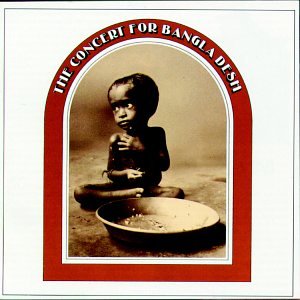
- Customers rating: (4.5 of 5)
- Title:The Concert for Bangla Desh
- Release date:1991-07-30
- Type:Audio CD
- Label:Capitol
- UPC:077779326525
- Average (4.5 of 5)(35 votes)
- .21 votes
- .13 votes
- .0 votes
- .0 votes
- .1 vote
- 1 - 1Introduction
- 1 - 2Bangla Dhun - Ravi Shankar
- 1 - 3 Wah-Wahimg 5:07
- 1 - 4 My Sweet Lordimg 4:42
- 1 - 5Awaiting on You Allimg
- 1 - 6That's The Way God Planned It - Billy Preston
- 1 - 7It Don't Come Easy - Richard Starkey
- 1 - 8 Beware of Darknessimg 3:33
- 1 - 9 While My Guitar Gently Weepsimg 5:09
- 2 - 1Medley: Jumpin' Jack Flash/Youngblood - M. Jagger
- 2 - 2 Here Comes the Sunimg 3:15
- 2 - 3A Hard Rain's Gonna Fall - Bob Dylan
- 2 - 4It Takes a Lot to Laugh, It Takes a Train to Cry (featuring Bob Dylan)
- 2 - 5Blowin' in the Wind (featuring Bob Dylan)
- 2 - 6Mr. Tambourine Man (featuring Bob Dylan)
- 2 - 7Just Like a Woman (featuring Bob Dylan)
- 2 - 8 Somethingimg 3:11
- 2 - 9Bangla Desh
Twenty years ago, this album opened new territory for me as a teenager. I was most taken with the Dylan side (5 songs), and the incredible performance of Leon Russell. Recently I re-bought the concert as a CD because I wanted to hear how it (and maybe I) measured up. It is fantastic! Now what I notice are the subtleties: how welcome the opening chords to "Wah-Wah" sound after the Ravi Shankar introduction, how Ringo bungles his way through the lyrics of "It Don't Come Easy", how George omits a verse of "Awaiting On You All", what a great addition Leon is to George's "Beware of Darkness", how George cuts off the applause to the introduction of Eric Clapton, how Leon sounds better than ever, how earnest George sounds in "Here Comes the Sun", how looking-back-prophetic Dylan sounds. And how George reclaims the show with "Something" and "Bangla Desh". This concert is where '60s hope met '70s futility. For all, it is a true rock treat. For me, it sounds better than ever!
It was 1971 and Bangela Desh was suffering one of its most severe famines and droughts in recorded history. Musician Ravi Shankar asked his friend George Harrison if there was some way the music community could help the suffering in Bangela Desh. This fine album is the result. Featuring spirited performances that vary from ragged to inspired, Concert remains one of the best benefit albums and the was one of the first of its type on such a grand scale.
Ravi Shankar starts things off with his piece Banla Dhun (Harrison admonishes the crowd to be quiet prior to the performance)Harrison's performances are stellar; the best songs from All Things Must Pass receive the production and sound that you hear on the original album. There's also a number of Beatles' classics as well (although, sadly, some of Harrison's early Beatles material is not included but you can find that on the Live in Japan album). Here Comes The Sun benefits from having Harrison accompanied by Badfinger's Pete Ham on acoustic guitar. It's a transcendent moment on the album.
Eric Clapton doesn't play any of his Cream material but appears as a support musician on most of the tracks. The talented Leon Russell duets on Harrrison's Beware of Darkness and performs an inspired medley of Jumpin' Jack Flash and The Coasters' Youngblood. Ringo appears with his solo hit It Don't Come Easy. It's a pity that John Lennon chose not to appear (he was invited) as the band featured here is superior to Elephant's Memory (Lennon's backing band on his live album).
Finally, Bob Dylan appears after a long self imposed exile from performing. His performance is a bit ragged but welcome. He begrudingly played Blowin' in the Wind (Harrison asked him to do so. Dylan retorted that Harrison should play I Want to Hold Your Hand).
In 1971, tens of thousands of refugees were fleeing into India from Bangla Desh, as the government in West Pakistan was attempting to assert its complete dominion over the eastern half of the nation. Pakistan had been created in 1947, following the withdrawal of the British from the Indian subcontinent, into two distinct land areas separated by over one thousand miles of Indian territory. The acclaimed Ravi Shankar, as a Bengali, was naturally concerned with the humanitarian crisis and hoped to arrange some sort of benefit for the cause. After seeking help and advice from his friend George Harrison, the whole project started coming together, eventually raising many times the amount of money Shankar had initially dreamed of. Under the leadership of Harrison, the Concert for Bangla Desh was planned and staged over the course of only some five or six weeks. Not only did the concert benefit a worthy cause, it gave us all an incredible concert performance to enjoy featuring some of the biggest stars of the day.
The show starts with an introduction by Harrison and a performance by Ravi Shankar and crew. Bangla Dhun is an incredibly long track that displays all of the mystical beauty and, to many listeners, wholly unknown sound of the sitar and other Asian instruments. The crowd showed a lot of appreciation for the performance, despite the fact that most of them came to see and hear Harrison, Ringo Starr, and Bob Dylan. Such an appearance by the reclusive Dylan was certainly an event in 1971, and he gave by far the strongest performance of the evening, singing five of his classic recordings: A Hard Rain's Gonna Fall; It Takes a Lot to Laugh, It Takes a Train to Cry; Blowin' in the Wind; Mr. Tambourine Man; and Just Like a Woman.
George Harrison, naturally, performed a good number of his own songs - including Beatles tracks alongside songs from his relatively young solo career. Harrison's delivery of Wah-Wah and My Sweet Lord are just terrific. Awaiting On You All, Beware of Darkness, and Something are also fine performances. His voice seemed to let him down a bit as the concert wore on, though, and this took a little something (but not much) away from his renditions of the immortal tracks Here Comes the Sun and While My Guitar Gently Weeps.
There were other noteworthy contributions on this night. Ringo Starr stepped out from behind the drums to sing It Don't Come Easy - apparently, remembering the words to the song is one of those things that "don't come easy." He does give an energetic performance, though. Billy Preston emerged to deliver one of the concert's best songs: That's the Way God Planned It, doing his career a lot of good through this one 1971 performance. Leon Russell excited the crowd with a forceful rendition of the Stones' Jumpin' Jack Flash and the song Youngblood. The group Badfinger added their talents to the mix, as did guitarist extraordinaire Eric Clapton. One of the most memorable moments of the night must surely have come when both Clapton and Harrison teamed up on the classic While My Guitar Gently Weeps.
I actually think the sound quality is pretty good on this CD, especially taking in mind the fact that this concert took place on August 1, 1971. The concert was a great success, raising almost two hundred fifty thousand dollars for the cause, and fans of George Harrison and Bob Dylan will definitely want to add this two-disc album to their CD collections if possible.
Benefit concerts are common place now, but this was the first. Held on 1st August 1971 in Madison Square Garden and captured using over 40 different microphones, these tracks still sparkle and this collection made a difference in the lives of many starving people.
Nearly thirty years later, the music is still fresh and hopeful. George Harrison (some of you may recall him as a member of the Beatles) gathered a few musicians for a magical night. Ringo Starr (identified in the liner notes by his birth name-Richard Starkey) from the Beatles joins Eric Clapton, Billy Preston, Leon Russell, Ravi Shankar, and Bob Dylan, among others.
The CD opens with almost twenty minutes of fantastic Indian music. Ravi Shankar plays a 'dhun' on sitar (just the name sounds like the popping of a drumhead) accompanied by sarod, tabla, and tamboura. Leon Russell's medley, "Jumpin' Jack Flash" and "Youngblood" is worth the price of this CD alone. I've listened to a lot of different recordings of this medley, but this is the best. It is alive and crisp. If that's not enough for you, keep listening and you'll hear Bob Dylan perform five great tracks. My wife and I saw him tour with Paul Simon in the summer of 1999, and marveled at his sets. But these tracks were recorded when he was at the peak of his career, and are clearly keepers. Have you ever heard "A Hard Rain's Gonna Fall?" How about "Blowin' in the Wind" or "Mr. Tambourine Man?" I'm sure you have, and they were current when these performances took place.
George leads various musicians (including the Apple band Badfinger) in a lot of familiar Beatle numbers, like "It Don't Come Easy," "Something," and "Here Comes the Sun." "Beware of Darkness" is a great track, recorded with almost everyone on stage. It is chilling!.
I still remember the LIFE magazine coverage of this event, and you can hear the audience in happy amazement at this once-in-a-lifetime moment. They bought tickets, not knowing who would be there (hoping, I suppose, for a reunion of the Fab Four.) Read the article.
Buy the brand new -at last!- DVD on 25th October and the new CD remastered edition. This is by far the best benefit concert.
Remember George Harrison 1943-2001
The artist's are terrific. This album brought George Harrison out to center stage in his career. It also brought Eric Clapton out of a self-imposed alcohol stupor, and launched the career of the relatively unknown "Brit," to Americans - Leon Russell. The music is great, but better if you know the songs they're performing from the individual artists before hearing these renditions. Some of the highlights include Clapton and Harrison sharing lead guitar's on Harrison's "While My Guitar Gently Weeps," and Leon Russell's lead vocals on Harrison's "Beware of Darkness." One of my all time favorites is "Wah-Wah," a great rendering considering all the talent available on the stage at this time. I've rated this (4) stars due to the limitations of the recording of this "live" benefit concert. This was the first of what would become many "Aid" type concerts and really began the whole genre of this type of selfless benefit concerts long before "We Are The World," or "Farm-Aid." Really a classic in its own right. I wonder who profits from these album sales now? A must have for any serious 60's / 70's collector.