


George Harrison Album: «All Things Must Pass»
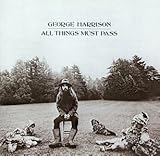
George Harrison Album: «All Things Must Pass»

- Customers rating: (4.7 of 5)
- Title:All Things Must Pass
- Release date:1990-10-25
- Type:Audio CD
- Label:Capitol
- UPC:077774668828
- 1 - 1 I'd Have You Anytimeimg 2:58
- 1 - 2 My Sweet Lordimg 4:42
- 1 - 3 Wah-Wahimg 5:07
- 1 - 4Isn't It a Pity (version one)
- 1 - 5 What Is Lifeimg 4:28
- 1 - 6If Not for You
- 1 - 7 Behind That Locked Doorimg 3:11
- 1 - 8 Let It Downimg 4:59
- 1 - 9Run of the Mill
- 1 - 10 Beware of Darknessimg 3:33
- 1 - 11Apple Scruffs
- 1 - 12 Ballad of Sir Frankie Crisp (Let It Roll)img 3:49
- 1 - 13Awaiting on You Allimg
- 1 - 14 All Things Must Passimg 3:56
- 2 - 1 I Dig Loveimg 5:02
- 2 - 2 Art of Dyingimg 3:46
- 2 - 3Isn't It a Pity (Version Two)
- 2 - 4 Hear Me Lordimg 6:02
- 2 - 5Out of the Blue
- 2 - 6 It's Johnny's Birthdayimg 0:51
- 2 - 7Plug Me In
- 2 - 8I Remember Jeep
- 2 - 9 Thanks for the Pepperoniimg 5:33
The original cd release of this album was marred by a muddy and hissy sound that took away from the great music. Finally after years of clamoring from fans, George Harrison has issued a remastered version of his classic All Things Must Pass. The results are outstanding as the songs sound clear and fresh. George Harrison was the Beatle who most immediately benefited from the band's breakup. Mr. Harrison was stifled by the domination of the Lennon-McCartney songwriting partnership and was only allowed a song or two per album. The songs that did appear, like "Taxman", Here Comes The Sun" & "While My Guitar Gently Weeps", showed that he was an excellent songwriter in his own right. When it came time to record his first proper solo album, he released an album of electronic noise called Wonderwall in 1968, he had such a backlog of material it yielded a double album with a third bonus disk. The songs are deeply rooted in the Maharisi's teachings that have been a large part of his life for the past thirty years. Despite the religious musings, the songs have an upbeat, full sound lead by Wall of Sound producer Phil Spector. Although Mr. Spector does sometimes overproduce songs, he makes a song like "My Sweet Lord" that could have been plodding and ponderous into a soaring affirmation. Of course that song was a huge number one hit, but others standouts include the beautiful cover of Bob Dylan's "If Not For You", the nice tribute to fans who hung outside the Apple Records offices, "Apple Scruffs", the yin and yang of "I Dig Love" and "The Art Of Dying" and the rollicking "Wah-Wah". "What Is Life?" may well be the best song he has ever done with it's blaring horns, layered guitars and smooth vocals. The production is classic Wall of Sound harkening back to Mr. Spector's work on Ronettes and Crystals records. The last few songs are from a jam session that included Eric Clapton and made up the bonus disk on the original release. They loose song structures that the band just have fun with. The bonus tracks included on the re-release don't really add much and the "My Sweet Lord 2000" would have been better left unrecorded. The cd booklet is expansive and contains many insights from Mr. Harrison himself. All Things Must Pass was to many a surprise success as they thought that only Paul McCartney and John Lennon would be successful in their post Beatle days. Not only was "My Sweet Lord" the first solo Beatle song to hit number one, but the album also reached the top of the charts and thirty years later still sounds fresh and exciting.
You all already know what music comprises this album so I will just write about the superior sonic quality of this re-issue and the new tracks issued for this release. It is a must have for anyone who enjoyed this album the first time around. Apparently, Harrison re-equalised and worked from the original 2-track master, but you can swear he re-mixed the entire album. The highs are crisper, the lows are punchier. It sounds GGRRREEEAAAT!!! "I LIVE FOR YOU" is far superior to any bootleg cd out their and the most completed version to date. The acoustic only out-takes of "Beware of Darkness" and "Let It Roll" are reminiscient of The Beatles Anthology release of "While My Guitar Gently Weeps". The music only mix of "What Is Life?" and the extra cornet horns is interesting but much too busy for the intro. The re-recorded version of "My Sweet Lord (2000)" is an interesting arraingment. To each his own. The liner notes, written by George, are informative and thoughtful as George can be. I just wish he wrote a little more. All in all, the packaging is great with a 20 page booklet containing alternate photos from the original re-lease some 30 years ago! plus lyrics,musicians,ETC. An interesting side note, George mentions a then 19 year-old named Phil Collins playing congas on "The Art Of Dying". This collection is truly fascinating and a aural pleasure!!!! Get it, and PLAY LOUD!!!!!!!!!
1970 saw the end of the Beatles (represented by the dismal _Let it Be_ album) and the debut of John, Paul, George and Ringo as solo artists. While each of the former fabs' releases of that year had something to recommend it (Okay, I admit it! I get a somewhat guilty pleasure out of listening to _Beaucoups of Blues_!), Harrison's _All Things Must Pass_ stands out as the grand statement of a Beatle freed.
Harrison's songwriting had grown by leaps and bounds in the last two years of the Beatles' existence. Songs such as "While My Guitar Gently Weeps", "Here Comes the Sun", "Something", and even "Old Brown Shoe" stood tall beside the increasingly fragmented songwriting of Lennon and McCartney.
_All Things Must Pass_ opens with the incredibly beautiful "I'd Have You Anytime" followed by the smash hit "My Sweet Lord". The third song, however, stands out above all the rest on the album. The snickeringly-titled "Wah-Wah" is a brilliant marriage of great rock and roll, Phil Spector's wall of sound production, and George's anger and frustration with his former bandmates (especially McCartney). This is perhaps the most played track on this reviewer's CD.
The quality of the music remains high throughout the album. The second hit from the album, "What is Life", is carried by an infectuous guitar riff and great Spector production. Other highlights include Bob Dylan's countrified "If Not for You", the cautionary hymn "Beware of Darkness", and the "Hey Jude"-like "Isn't it a Pity (Version 1)" (The second version is good, but redundant. It probably should have been used as a B-side or maybe even an independent single).
The quality of this music is so high that it more than makes up for the last disc of pleasant but ultimately forgettable instrumental jams.
_All Things Must Pass_ is the glorious statement of an artist ready to stand tall on his own. No serious record collection should be without it.
Like most of you who probably had this album when we was fab-- er, when we were kids, "All Things Must Pass" was one of those "gotta have it" albums. Sure, some songs are clearly better than others, and I don't think I played "Apple Jam" on vinyl more than once (admit it, you didn't either).
This album is every bit as good as you remember it.
As George says in the liner notes, ATMP is composed of a lot of the songs he wrote in the waning years of the Beatles. (Amazing that he decided not to record "Not Guilty," though, until years later.) And what a busy boy he was!
Remember how thrilling "My Sweet Lord" was when you first heard it on bad AM radio transmission? Listen to it here in all its glory.
"What is Life?" An instant hit if I ever heard one--and it was.
"Beware of Darkness" and "Let it Down" are two of George's best moments ever. The inclusion of their demos is wonderful.
So, too is a great "Lost Harrison" song, "I Live For You." Mixed so well you can't really tell that the drum track was recorded last year! I also like the recent additions that George made where necessary to some of the other demos.
Even the remastered "Apple Jam" (Johnny's Birthday, the only song on the Jam disk I ever listened to more than once, has been conveniently moved to first position in the song order of the jam) sounds like the guys were having a hell of a good time.
Dont pass judgement on the new version of My Sweet Lord until you listen to it a few times. It WILL grow on you, I promise.
Stop reading and buy this. Even the Packaging is cool!
Harrison had already proved his songwriting worth as a Beatle during their final few years, a growth that culminated in his two dazzling contributions to "Abbey Road". Even so, it came as something of a surprise when his first proper solo work, the triple-album set "All Things Must Pass", managed to both artistically and commercially outshine the initial solo efforts of Lennon and (especially) McCartney, who had belittled his efforts while still in the group. Drawing from an enormous back catalog of rejected Beatle tracks (a list so huge that outside of the 16 which made it onto the album, a further 10 or so--including such gems as "Beautiful Girl", "Mother Divine" and "I Live For You"--remained in the vaults), the dark horse and his willing co-producer Phil Spector fashioned an album of monumental reach, epic scope and lilting emotional beauty which, thirty years later, remains not only Harrison's crowning achievement but arguably still the best
album from an ex-Fab. Tracks like "Beware Of Darkness", "Run Of The Mill" and "Isn't It A Pity" are fashioned out of spiritual lyrics, silky vocals and cosmic orchestral arrangments which combine to create music that relieved many a heroin addict from his or her affliction, so powerful was their effect. The album seemed effortless and instantly memorable, the third disc of somewhat plodding jam sessions being recognized for what it was (a free bonus not to be considered part of the actual album itself).
As Harrison states in the remaster's new liner notes, he now wishes to re-do the songs sans the famous "wall of sound"; he gives us a sample of what he means with a rerecorded "My Sweet Lord", which substitutes the strings for more gospel-ish backing vocals and intricate slide guitar work. The acoustic guitars still glisten, and while not an improvement over the original, it is worthwhile nonetheless. Thankfully, the glorious wall of sound is still there on all the old tracks, remastered to sound like the original vinyl for the first time (and perhaps even a bit better); fans have always complained that the mix of the album seemed a bit muddy, and this is as clear as its going to get. I always thought the reverb to be essential to the sound of the album, and here it sounds better than ever. The rest of the bonus tracks are fine, although they could have put on more: "I Live For You" features a lilting pedal steel guitar part, while the acoustic demo for "Let It Down" is given an extra guitar overdub for maximum soothing effect. The "Apple Jam" sessions have been resequenced, and they do sound better in this context (the synth effects in "I Remember Jeep" come out best here). As for the original brown cover being replaced by the concrete and nuclear reactors in the booklet--some say it's Harrison being cynical, but cynicism is always the last refuge of the idealist, no?) Harrison's cynicism here is best expressed as a little joke, as he says, although they still should've reprinted the original brown cover as well!