


Disco de Enigma: «Return to Innocence»
Disco de Enigma: «Return to Innocence»
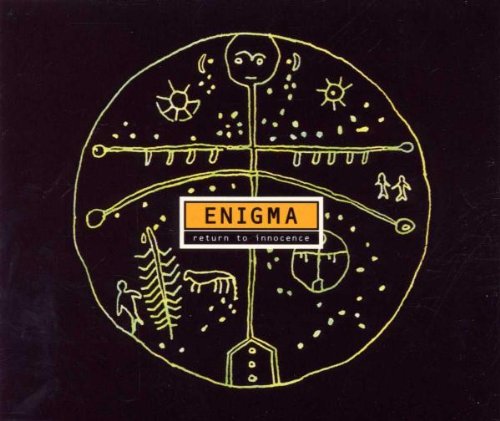
Disco de Enigma: «Return to Innocence»

- Valoración de usuarios: (4.5 de 5)
- Título:Return to Innocence
- Fecha de publicación:1998-11-17
- Tipo:Audio CD
- Sello discográfico:EMI Import
- UPC:766483342029
- Media (4.5 de 5)(24 votos)
- .17 votos
- .5 votos
- .1 voto
- .0 votos
- .1 voto
- 1Return To Innocence(Radio Edit)
- 2Return To Innocence(Long & Alive Version)
- 3Return To Inncocence(380 Midnight Mix)
- 4Return To Innocence(Short Radio Edit)
When William Bolcom (b. 1938) was a teenager he read and was moved by William Blake's set of 46 poems, 'Songs of Innocence and of Experience,' and vowed that one day he would set them all to music. Indeed, he began the task in the mid-1950s but set it aside until he arrived at the University of Michigan where he has been on the faculty since the early 1970s. He had remembered the utter joy of participating in the chorus in a performance of Bach's 'St. Matthew Passion' while a student at the University of Washington, a performance that called on many of the resources of that university and its community. He says that he wanted the same sort of experience for those who participate in his orchestral Blake song cycle, and indeed this recording comes from just such a production. It uses many of the resources of the wonderful School of Music at the University of Michigan (its orchestras and choruses) as well as musicians from outside the School and community musicians as well, all under the direction of conductor Leonard Slatkin. Add to this the use of professional soloists from all across the musical spectrum (opera singers, a Broadway actor/musician, a folk/blues musician) and you get a mix that includes almost everything but the kitchen sink. This is Bolcom's 'Symphony of (almost) a Thousand,' as it were, as it takes upwards of 500 people to perform. Ann Arbor's Hill Auditorium was filled to the max when this performance took place on April 8, 2004.
There has been an buzz about this piece among music-lovers ever since its première in Germany under the direction of Dennis Russell Davies in 1984. In spite of the huge number of performers required (not to speak of the need for a stage director) it has since been mounted a dozen times. And those of us who had wanted badly to hear it but had not been able to attend a performance, had had to make do with bootleg tapes of previous performances. And we hoped and prayed that one day it would be recorded commercially. Our wait is over! And thanks to Bolcom's wisdom, it is on the budget label, Naxos, rather than one of the high-priced labels; thus its 3CDs will not break anyone's budget. Bolcom notes that in these days of the easy ripping-and-burning of CDs privately, it made more sense to issue the performance on a budget label in hopes that more people would simply go out and buy it, rather than ask someone to burn it (illegally, of course) for them. In addition, of course, one would get the complete texts and booklet notes as well. Smart move.
What about the music and the performance? The diction and emotional tone in Blake's poems, as is well known, are extremely variable, from elegant Drydenesque verses to the down-and-dirty vernacular of 1790s London, from songs of purest childlike innocence to poetic harangues about the horrors of the world. Bolcom has supplied music, using all the resources available to a 20th century composer, that mirrors both the diction and the emotional content of the poems. Thus we have the simple lullaby of 'A Cradle Song' (sung deliciously by soprano Linda Hohenfeld) to the bewildered trusting tone of 'The Chimney Sweeper' set to a Salvation Army band accompaniment (and narrated by Broadway actor Nathan Lee Graham, a standout whenever he appears here); from the child's nature poem (of a lost Ant [Emmet] having its way home lit by an obliging glow-worm) of 'A Dream' in a lively atonal orchestral setting and sung expertly by lyric soprano Ilana Davidson, to the corresponding, horrific Webernian 'Little Boy Lost' (sung by soprano Carmen Pelton and the combined choruses) whose Little Boy has no one to help him find his way; from the percussion-accompanied choral Sprechstimme of 'Tyger, Tyger, Burning Bright' to the ethereal 'The Fly' sung by string-accompanied children's chorus; from the gentle guitar-accompanied 'Nurse's Song' ['When the voices of children are heard on the green'] sung in her inimitable (and beloved) style by Bolcom's wife, mezzo Joan Morris to the woozy 'The Sick Rose' [eclipsing, in my mind, Theodore Chanler's setting] sung by contralto Marietta Simpson with preternatural calm that nonetheless evokes horror; from tenor Thomas Young whose opening Introduction sets up the expectation that we are in for great things, to soprano Measha Brueggergosman whose rich soprano (and spot-on intonation) is assigned to 'The Lamb' and 'The Blossom,' both set atonally, and baritone Nmon Ford who sings the hieratic 'Hear the Voice of the Bard (Who Present, Past & Future sees).' Well, you get the idea. There is something here for everyone, but more important there is a unity to both poems and music, in spite of the disparate styles, that makes the set a coherent whole.
Assuming Amazon, as it seems to be doing these days, decides to list all the tracks and allows you to listen to the first minute or so of each track, I would suggest, in addition to the songs listed above, that for more of a taste of the delights of this set you hear snippets from:
My Pretty Rose Tree (CD 3)
Ah, Sun-Flower (3)
The Little Vagabond (2)
London (3)
The Black Boy (1)
Earth's Answer (2)
Bolcom slightly rearranged the published order of Blake's poems, but cites a discovery--a list of the poem's titles among the papers of Blake's widow--that supports his ordering. He had from early on decided to put 'A Divine Image' at the very end, largely because of its summing-up of human nature:
'Cruelty has a Human Heart
And Jealousy a Human Face;
Terror the Human Form Divine,
And Secrecy the Human Dress.
The Human Dress is forged Iron,
The Human Form a fiery Forge,
The Human Face a Furnace seal'd,
The Human Heart a hungry Gorge.'
This shattering poem is set to shattering music sung ironically as if by a mystical Sportin' Life by Nathan Lee Graham (with the combined choruses). A devastating finish to a stunning achievement by Bolcom and his musicians.
Make no mistake, this is a magnificent work in a performance whose recording preserves the sense of occasion, almost certainly the major piece by which Bolcom will be most remembered. (Although I need to say that I hope many others of his works survive, including the eagerly awaited opera based on Robert Altman's marvelous movie, 'The Wedding,' set for production at the Lyric Opera of Chicago later this year). 'Songs of Innocence and of Experience' has rarely been out of my CD player since I received it and likely that will continue: this work contains the world.
You cannot afford to be without this magnificent work. Grab it; it's not likely to be recorded again soon.
TT=3CDs: 2:17:11
Scott Morrison
I have heard various descriptions of this magnificent work but the best to date is "An American Gurrelieder"
Bolcolm's musical language encompasses nearly every style of music - even some seemingly jarring genres one would never expect to coexist - yet they are seamlessly blended into what sounds like a natural whole. This is a remarkable achievement and it is a shame that so massive and important a work remains somewhat neglected. Kudos to Naxos for helping remedy "Songs" neglect by releasing this live and glorious performance out on their American Classics series.
With hundreds of musicians involved, all under the watchful and loving baton of Leonard Slatkin the combined forces deliver a performance for the ages. It is "okay" to listen to the discs (or portions of the work) individually, but to experience the entire thing in a single sitting - well the experience is an overwhelming one. This should definitely get a nod for "Record of the Year" as it is one of the most remarkable achievements in modern American music history.
Highest recommendation.
This is an amazing and wonderful work. It is not only a great listen for the casual music lover, but it is a staggering achievement for those who realize all the compositional problems William Bolcom has taken on and solved so beautifully in this work. If you believe all the interesting art music was written more than a century ago, I encourage you to give this work from the 1980s an open hearted listen and see if you can be won over. I believe you will find more to love on each hearing.
What are the challenges in setting the most popular of Blake's works to music? First of all, there are forty-six songs (poems) to set. Many of them have been set to music by other composers as individual songs or as a collection of a few of them. The idea of performing all of them as a single work in a single evening is near madness. How do you keep the audience from becoming weary? Even Romantic Era large orchestral settings of poems usually limit themselves to no more than a few poems.
There is also the larger structure to think of. The composer has to provide enough variety to keep the audience involved, but enough restraint to build a sense of coherence. So, what does Bolcom do? He uses every musical resource and genre available to him. He has traditional art music forms from chamber singing to grand opera. He also has folk music, sacred hymn, Southern hymnody, grand ole opry, rock elements (not a rock and roll song), reggae (sounds more like calypso to me), cabaret (Bolcom's specialty), movie and theater music (one not unlike something from "Les Miserables"), a dramatic speaking voice over music, tin pan alley, Broadway, and more. All the while, it is clearly in the sense of what one can usefully call Art Music and hangs together by the way Bolcom connects them with instrumental interludes.
Bolcom also varies the sizes of the forces performing. We hear various ensembles that range from a single voice with a single guitar all the way up to massed choruses and huge orchestra with pipe organ. Bolcom has a real talent for drama. He keeps things moving and moves our attention from one thing to another. And the settings are all so nicely appropriate for what Bolcom is trying to illuminate for us in each poem/song.
This great variety in presentation and heterodox approach to musical materials is quite in keeping with what Blake presented us in his illuminated books. Blake pushed beyond the conventional printing and engraving techniques of his day to create these works. The songs / poems also present a huge range of technique, voice, and affect. Throughout we find joy, sorrow, jokes, irony, divine love, eros, sweetness and a hard bitterness. William Blake used everything he had available to him in presenting his songs to us through his printing; it is surely appropriate that William Bolcom has used such a wide ranging musical palette in setting these songs to music.
This work is a treasure and you owe it to yourself to become familiar with it.
While this may not appeal to all tastes, it is definitely worth a listen if you are interested in exploring modern music. This is not what some people may expect when the term modern is used, although it is certainly modern. The other reviews have gone on at depth, I just want to say that I've listened to this recording several times and each time I hear something new. A fine addition to your CD collection.
Readers of this review should be aware of a potential conflict of interest. The composer and I are both on the faculty of the University of Michigan, though we work in different units and I have never met Bolcom.
An impressive work, performed impressively. Bolcom has set the texts of the famous Blake poems with a remarkable variety of musical styles ranging from what might be called modern dissonant music to popular idioms. This could easily be a gimmick but each and every setting is a very successful combination of text and music. Even more impressive is that this work doesn't feel like a melange of different songs. Despite the use of different musical idioms, Songs of Innocence and Experience is a unified work. This recording features an excellent performance, no small feat considering the need for a large number of excellent soloists, choirs, and ensemble players.
A final comment by a hometown boy. Part of the fine sound of this recording is due to the venue, Hill Auditorium. For many, the word auditorium probably conjures up recollection of a dingy part of high school. Hill, however, is an unusually handsome, free standing building on the campus of the University of Michigan. Designed by the great Albert Kahn, Hill boasts wonderful acoustics and has recently been restored to its original splendor. It is the least known great concert hall in the USA.