


Bob Dylan Album: «Modern Times»
Bob Dylan Album: «Modern Times»
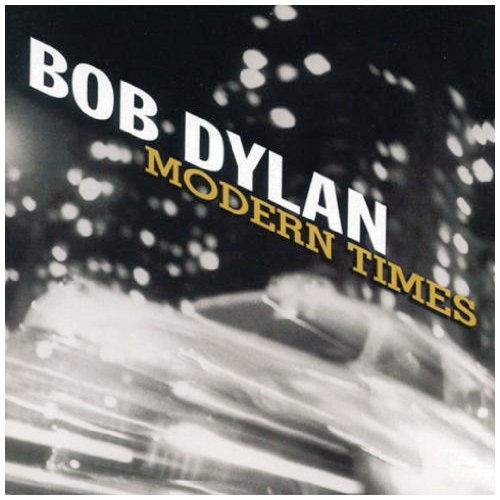
Bob Dylan Album: «Modern Times»
- Customers rating: (4.4 of 5)
- Title:Modern Times
- Release date:2006-08-29
- Type:Audio CD
- Label:Sony
- UPC:828768760628
Dylan Classics and Collections
| | | |
| | |
| | |


Bob Dylan for the last few years has been one of the most exiting artists rock has to offer. He has written a best selling book, toured extensively, and recorded two highly regarded albums, putting him in a late career renaissance
Starting with 2001's effort, LOVE AND THEFT, and now this album, MODERN TIMES, Bob Dylan has newly occupied musical territory. Dylan has broken new ground with both these releases. Nothing in post-millennium rock sounds anything like these two records, and for good reason. Bob Dylan has turned back the clock to pre-rock and roll, and recorded some of the most exiting music of his career, focusing solely on American traditional music.
Dylan came into critical acclaim with the 1997 album, TIME OUT OF MIND. His first album of original songs in seven years, TOOM won best album of the year at the Grammies, and the first of three critically acclaimed albums. MT has been marketed as the end of this "trilogy," but Dylan disagrees with that assessment. TOOM, great album that it is, sounds totally separate from L&T and MT and is an album unto itself, totally separate from the music found on the next two releases. Dylan said MT would be the second part of a trilogy, if there is going to be one, with L&T being the first part.
When LOVE AND THEFT was released, Dylan impressed the critics and the fans a second time in a row. L&T is a markedly different album than its predecessor, TIME OUT OF MIND, which is a much darker, aesthetically different album. MODERN TIMES is very much a companion album to L&T, and proves the methodology behind his 2001 effort was not a one off fluke. Dylan does a wide variety of traditional music on MT, from blues to ballads to crackerjack rock and roll to apocalyptic visions of oncoming doom.
Song for song, MT is as strong and L&T, with a few casual masterpieces. "Working Man's Blues #2" is fantastic, some great lines. "Ain't Talkin'", MT's last song, is not only the best song from album, but also one of Dylan's greatest songs of the last 25 years, easily the equal of any of his 1960s output and a lyrical tour-de-force, the newest of his great story, apocalyptic story songs.
Dylan largely writes from the perspective of one who has seen it all, but keeps on trucking (like the narrator from "Tangled Up In Blue").
Both records have been tremendously successful. MODERN TIMES went to number one on the billboard charts, Dylan's first since the 1976 album DESIRE. Dylan is the oldest person (65 at the time), to have a number one album on the charts. "Someday Baby" won a Grammy.
MT is largely a further exploration of Americana. Just like its predecessor, MT is squarely rooted in pre-rock music. Like L&T, MT sounds fresh, startling, and deeply relevant due to it being so firmly rooted in American traditional music. There is no other musician today who makes these traditional forms so wonderfully alive, and yet so in sync with his or her own unique and musical vision as Bob Dylan does, while still making them so accessible to today's public.
Both titles are a clue to what the album is about. L&T is Dylan's love for prerock music, and his ransacking of the forms (a sly reference to the folk tradition). MODERN TIMES, is rather ironic, as there is nothing modern about the music itself, but the title also acknowledges, in a post modern sort of way, that the album is recorded and presented in modern times for modern audiences, and a knowing reference to Charlie Chaplan's film.
Also, Dylan has gone on interviews saying this is the best band, man for man, that he's had, which is saying a lot, as he was backed by so many great bands. Dylan's also made several comments about how compressed the sounds are on modern records, something he had tried to stay away from.
Where L&T used early 20th musical structures and genres, Dylan wrote all the music and lyrics. With MT, however, Dylan has turned too T. S. Eliot for advice, who famously said "Bad poets imitate. Good poets steal." Working within what is known as the "folk tradition", Dylan has taken several songs from his encyclopedic knowledge of traditional music, updated either the music or the lyrics or both, and then presented the material as his own. He has also used a few select lines from Henry Timrod, the Civil War poet. Both the songs and Timrod are now in public domain, so the sources are not a legal issue. Regardless, All this has caused some controversy.
First, it should be known that before copyright laws and intellectual property rights became one of the abiding legal preoccupations of the 20th and 21st century, musicians and performers largely worked within the context of an oral and written tradition, freely adapting and changing often well known material and presenting it as original work. This goes far beyond just music as well. This process, known within musical history as the folk tradition, has been going on in American traditional music for decades, and has also been part of rock's long and varied history as well.
However, with the entrance of rock, matters get complicated. Intellectual property rights in the past forty to fifty years have become major legal issues. Now, music is copyrighted and royalties get paid. Songwriting credits determine who get paid. Those who wrote original music want to get paid when that music is used. While most of MT's music is modeled after other artists' songs, the credits read "All songs written by Bob Dylan".
Led Zeppelin is also famous for this type of adaptation, and was even sued by Willie Dixon in 1970 for the use of lyrics in their song "Whole Lotta Love" without him being credited. Dixon won the lawsuit.
Bob Dylan has done this type of adaptation and musical pilfering from the very start of his career. One of his very first original songs to be published, "Song to Woody", used the melody of Guthrie's own "1913 Massacre". There are numerous other instances of this type of artistic pilfering in Dylan's music which for reasons of space I will not go into. A book or scholarly paper is better suited to more fully analyses and explore this element in Dylan's music, not a review on a website. For those curious, I include at the end of this review more info about the MT's sources.
While from a business and artistic standpoint, this adaptation and borrowing, yet not crediting the source, is rather alarming to modern audiences, it's my belief that that has what made MT and L&T resonate so well. There is something in both records that simply strike a chord with listeners. Dylan has always been about traditional music, and while he ventured out to record different varieties of music, the American traditional songbook has always been in the back of Dylan's mind.
What has made MT and L&T so successful is they feel like an aural history of American music before 1950. Of all the major rock artists of the modern era, Dylan is the most versed in the rich American traditions. American traditional music have always been the bedrock of his muse, and with L&T and MT Dylan wisely makes that the central focus of his work. This music sounds like a time capsule, music made by an American for Americans before the advent of rock and roll. Dylan is the most qualified of all our major rock artists to make music with this timeless, traditional feel.
Due to his own unique position in rock history, no other major musician other than Dylan has released an album with all the rich history of Americana so inherently woven in the fabric of his new music. In all likelihood, no other artist probably could. Dylan cut his teeth on traditional music, and he is the most able to make that music relevant again to modern audiences.
Bottom line: fantastic album. Must buy.
Appendix - Sources for MODERN TIMES songs:
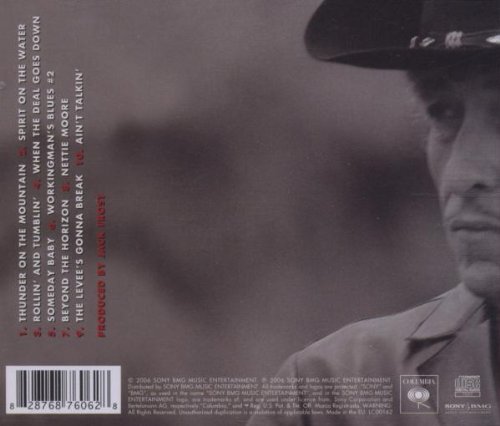
*"Thunder on the Mountain" is an update on Chuck Berry's "Johnny B. Good'. *"Rolling and Tumbling" is a blues standard, recorded by everyone from Cream, Canned Heat, Robert Johnson, and Eric Clapton. Muddy Waters' version is the most famous. There are over sixty recorded versions of this song.
*"When the Deal Goes Down" uses the melody from Bing Crosby's signature song "When the Blue of the Night Meets the Gold of the Day".
*"Someday Baby" is based off a Muddy Waters song called "Trouble No More".
* "Beyond the Horizon" lifts the entire structure and melody of "Red Sails in the Sunset", written by Jimmy Kennedy and Hugh Williams in 1935.
*"Nettie Moore" lifts the title and some of its chorus though Dylan's melody and lyrics are otherwise unrecognizable.
*"The Levees Gonna Break" is a based on the blues standard "When the Levee Breaks" by Kansas Joe McCoy and Memphis Minnie. Led Zeppelin reworked the song as well into their own composition, much different from Dylan's.
*"Aint Talkin" derives its chorus from the more up-tempo "Highway of Regret" by the Stanley Brothers
In his latest Rolling Stone interview, Bob Dylan was quoted as saying "This is the best band I've ever been in, I've ever had, man for man." Quite a compliment coming from someone who's been backed by not only the best session men of the sixties, but The Grateful Dead, The Heartbreakers, and of course The Band. However, after listening to `Modern Times' and `Love and Theft' it really is hard to argue with him. He not only has found a band that can lay down an interesting backdrop to his at times epic poem-like lyrics, but create such good music that it stands up against Dylan's brilliant lyrics as an almost equal competitor for your attention.
Instantly the high level of musicianship is evident on "Thunder on the Mountain". It opens with short punctuated drum fills that bring to mind Cream's "White Room" but instead of Clapton's psychedelic phase, the guitar sound throughout is more in the style of someone like Chet Atkins playing twelve bar blues. Dylan's first line is introduced with a brilliant cymbal wash that sounds like it could be the rock n' roll equivalent of a gong being banged before Confucius speaks. But that first line "Thunder on the mountain and a fire in the moon/the river's in the alley and the sun will be consumed" sounds more like John the Revelator.
"Rollin' and Tumblin' is basically a really great cover of the Muddy Waters classic from 1950. Dylan leaves the chorus as is, but writes completely new verses all his own (certainly the original didn't contain the line about how "some young, lazy slut has charmed away my brains"). The subject matter of the original does remain the same however, with Dylan rattling off lines that sound like they were pulled directly off any classic Delta blues tune ("warm weather's coming in/the bug's are on the vine/ain't nothing more depressing than trying to satisfy this woman of mine"). In fact, this really just exemplifies how Dylan has reinvented himself once again as a bluesman over the last three albums. The entire subject matter of his last three albums has been the subject matter of the Delta blues: religion and women.
Every one of the hard blues songs on `Modern Times' contains the best soloing on a Bob Dylan studio album since "Leopard-Skin Pill-Box Hat" - and by soloing I don't mean just one solo stuck in between the words somewhere, but splattered throughout the songs naturally, never once sounding forced. On "Someday Baby" is where it peaks. The fuzzy guitar tone just glows, making you want to kill for whatever vintage tube amp the guitarist had to have been be using, and the rhythm just cooks. This is one of the rare Dylan tunes where the music just slightly edges out the words in terms of pure listening pleasure. Even Dylan`s singing is way above par here, especially listen to the line "So many good things in life/that I've overlooked/I don`t know what to do/baby you got me soooo hooked" and try and say that Dylan's voice isn't just improving with age.
"The Levee`s Gonna Break" is another cover of a classic blues song, this time Memphis Minnie's classic "When the Levee Breaks." The verses are completely Dylan's own, but again the chorus is the same as the original made so famous by Led Zeppelin. Of course before even listening to the song people are going to try and say it has to do with Katrina, but the lyrics have more to do with love and the apocalypse than anything as simple as a natural disaster. Take for instance the line "Put on your camp clothes mama/put on your evening dress/few more years of hard work then there'll be a thousand years of happiness." Even an atheist like myself knows what he's talking about. And then there's the final line "some people still sin and some are wide awake."
The subtle apocalyptic messages of "The Levee's Gonna Break" perfectly set up for the eight minute plus epic closer, "Ain't Talkin." The feel is the same as `Time Out of Mind's "Highlands", but Dylan's lyrical flow never gets disrupted for a six minute retelling of a conversation with a waitress. The imagery in the song is dark, dangerous, and not very hopeful. Picture Dylan walking down a lonely path through the Mystic Garden, in the cities of the plague. His sick mule and blind horse are walking by his side. At one point he is hit from behind by an unknown stranger. Bad idea - the Dylan here is no one to mess with, he waits for his opponents to be caught sleeping and then slaughter's them where they lie. Dylan also manages to fit in some of his usual subtle sarcastic wit, this time directed at his disillusion with the trappings of fame - "well the whole world is filled with speculation/the whole wide world which people say is round/they will tear your mind away from contemplation/they will jump on your misfortune when you're down...someday you'll be glad to have me around." Later he returns to religion, reaffirming his status as a diehard Christian, but still distancing himself from any organized view of it - "ain't no altars on this lonesome road" Really I could go on and on about this song, which is the crown jewel of the set, with every new verse being a revelation. Musically the song is even more menacing than "Highlands" with the addition of a perfectly minimalist use of lurking viola, even though it ends with a happy crescendo, it only adds to the feel of apocalypse like it was a musical representation of Jesus returning.
`Modern Times' is Dylan's third straight masterpiece in a row and only cements the fact that his current period can only be compared to his inspired 1964-66 run. Certainly you could argue that with 4-5 years between albums it's nowhere near as prolific, but when the albums are this shockingly and consistently brilliant song after song who cares? To quote the review in Rolling Stone, "there is no precedent for the territory Dylan is now opening with albums that stand alongside the accomplishments of his wild youth." The only person to even come close is (as always) Neil Young. Dylan himself, in the same interview, when asked about this being the third part of a trilogy beginning with 'Time Out of Mind' gives the best description of how great `Modern Times' really is: "'Time Out of Mind' was me getting back in and fighting my way out of the corner [referring to his second infamous "dry period" after 1989's `Oh, Mercy' where he didn't release any original material]...on this record, I ain't nowhere, you can't find me anywhere, because I'm WAY gone from the corner
When I first listened to the CD I thought it was second or even third of the last three he has made. But after listening to it for a few days I am think it is perhaps the best of the three. It is not a humorous as the second or as dark as the first. Even more than the first it points to someone who is coming to terms not just with aging, but with the end of life which is beginning to come into view. I think he is again giving voice to his generation, where we are getting to the point where both our parents have passed, and while we are not ready to go yet, we can now see a bit of the horizon which in the past was only an intellectual exercise. And yet even with that there is the will to carry on, and carry on with vigor...thus we have lyrics like, 'you think I am over my prime, lets put it to the test'...dont have the lyrics in front of me, but I am sure others will have the exact lyrics.
He has also returned a bit to social commentary with "Workingman's Blues" where he gives his opinion of globalization. In "The levee's gonna break" there are certainly references to New Orleans, but also I see it as being an extension of "Hard Rain Going to Fall" in that perhaps we are going through such a rain and indeed the levee's may break. That could be a reach, but the is the wonder of his songs, they are nebulous enough for us to find the meaning that suits us :)
I really like almost all the songs on the album, probably the faster ones a bit more but even "Beyond the Horizon" which has a Hawaiian flavor is good due to the strong lyrics. (Not really a bit fan of Hawaiian music).
A number of songs like "Ain't Talkin" remind me of the way he strung different images together like we saw on his earlier songs like Hwy 61. The other theme that continues is his religious references, which are mostly personal now. So we get things like 'now I see where the scriptures are true.' These flow with the song, again much like is early music but a bit more personal. Always loved the idea that God was telling Abraham that the next time he saw him he had better run :)
I cannot believe some the other reviews here - this is one outstanding recording - both sonically and musically. Just superb. Every song is a winner - not a bad track on the album at all - some of it just so deep and evocative - certainly the best new album for the last few years from anyone at all - beautiful melodies and excellent band and production - no one will be disapoointed by getting this album - a true work of beauty by a genius. Get it.
"When I was a little kid in La Jolla, California, which is a very small town, we had a parade on the 4th of July and I remember clearly the sight of Civil War veterans marching down the main street, kicking up the dust. The first time I heard Bob Dylan, it brought back that memory. And I thought of him as something of a Civil War type. A kind of 19th century troubadour. A maverick American spirit...his words go straight to the heart of America.- Gregory Peck 1997, Kennedy Centre Award ceremony
`I couldn't exactly put in words what I was looking for, but I began searching for it over at the New York Public Library...I started reading articles in newspapers on microfilm from 1855 to about 1865...I wasn't so much interested in the issues as intrigued by the language and rhetoric of the times' - Bob Dylan,2004 Chronicles Part 1, page 84
`I realised how astonishing [Dylan's] songs were, provided that you really listened to them...this won't do for background music; it won't even do for middle ground music; it has to be right at the front of your attention'- Professor Christopher Ricks, Book Talk, Australian Radio National, March 2004.
These three comments sprung to mind, when Bob Dylan's brilliant new album concluded with a final track to match almost any in his mighty back catalogue. The music is crammed with impressions of `that old weird America'. The language is rich and almost noble in its cadences. The ancient voice is awesome. But you do have to listen very carefully. As usual, too many media critics have rushed to [generally positive] judgement. Most have been complimentary but often superficially so, like somebody reading a Camus novel for only its story line and missing deeper allegories.
Nostalgic 60s devotees may scoff, but I hear this as close to his best-ever album. Perhaps it is because I am growing old too, but this is exactly the Dylan I want to listen to right now. When he sings `Oh I miss you Nettie Moore...', I hear a chorus as affecting as anything he ever wrote and a vocal of absolute perfection. It is the highlight of the album for me.
Notwithstanding regular criticism from the concert-reviewing set, the band contributes mightily too. The album has a beautifully clean, uncomplicated sound. And the subtle use of violin, viola and, especially, cello `underneath' several tracks really adds something.
Another fabulous creation from a man who, as Tom Petty said this week, is simply better than everyone else.
The dvd is a nice bonus too.