


Antônio Carlos Jobim Album: «Sinfonia Do Rio de Janeiro»
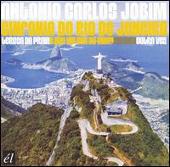
- Title:Sinfonia Do Rio de Janeiro
- Release date:2006-07-18
- Type:Unknown
- Genre:Latin Jazz
- Label:Él
- Explicit lyrics:Yes
- UPC:5013929307520
Album information
Review
This is a historically valuable reissue of mid-'50s material from early in Antonio Carlos Jobim's career, particularly as none of it had been released outside of Brazil prior to this U.K. compilation. However, it might not be what some listeners expect of Jobim, even considering how early it was done. The bossa nova that he'd help pioneer is more a hint here than a fully realized form, with at least as much pop as jazz in the mix. Most of the disc is given over to two entirely different treatments of his suite (co-written with Billy Blanco) "Sinfonia do Rio de Janeiro," one of them instrumental, the other featuring an assortment of vocalists. The instrumental one, while less elaborate, is the more successful of the pair, though it gives as much prominence to accordion as guitar. There's a breezy lilt to this piece, though the constant presence of the accordion, among other things, makes it seem more like a meld of Brazilian music and pop than one that marries the styles to jazz swing. The vocal version of this symphony is far more overblown, and sounds more like a corny 1940s Hollywood musical adaptation of the work (complete with strings and white-bread choral voices) than one that might have helped set stones in the path of a truly Brazilian form of popular music. Filling out the disc are four additional tracks from the same era with vocals by Nora Ney, Dick Farney, and Lúcio Alves. A couple of these songs are lushly arranged in the same manner as the vocal rendition of "Sinfonia do Rio de Janeiro," though the sparer "Teresa da Praia" (sung by Alves and Farney) and "O Que Vai Ser de Mim?" (sung by Ney) show more of a bent for tentative Latin-jazz-pop hybridization. ~ Richie Unterberger, All Music Guide
Track listing
- 1Teresa Da Praia
- 2O Que Vai Ser de Mim?
- 3Sinfonia Do Rio de Janeiro/Arpoador
- 4Sinfonia Do Rio de Janeiro/Noites Do Rio
- 5Sinfonia Do Rio de Janeiro/O Samba de Amanha
- 6Sinfonia Do Rio de Janeiro/Hino de Sol
- 7Sinfonia Do Rio de Janeiro/Descendo O Morro
- 8Sinfonia Do Rio de Janeiro - A Montanha O Sol E O Mar
- 9Silidao
- 10 Outra Vezimg 1:55